 Corporate Brand Activations
Offline Marketing in India
Explore offline marketing in India, including retail branding, experiential marketing, BTL marketing, corporate activations, visual merchandising and brand activation strategies.
Offline Marketing in India: Strategies, Benefits, Brand Activations & Retail Experiences
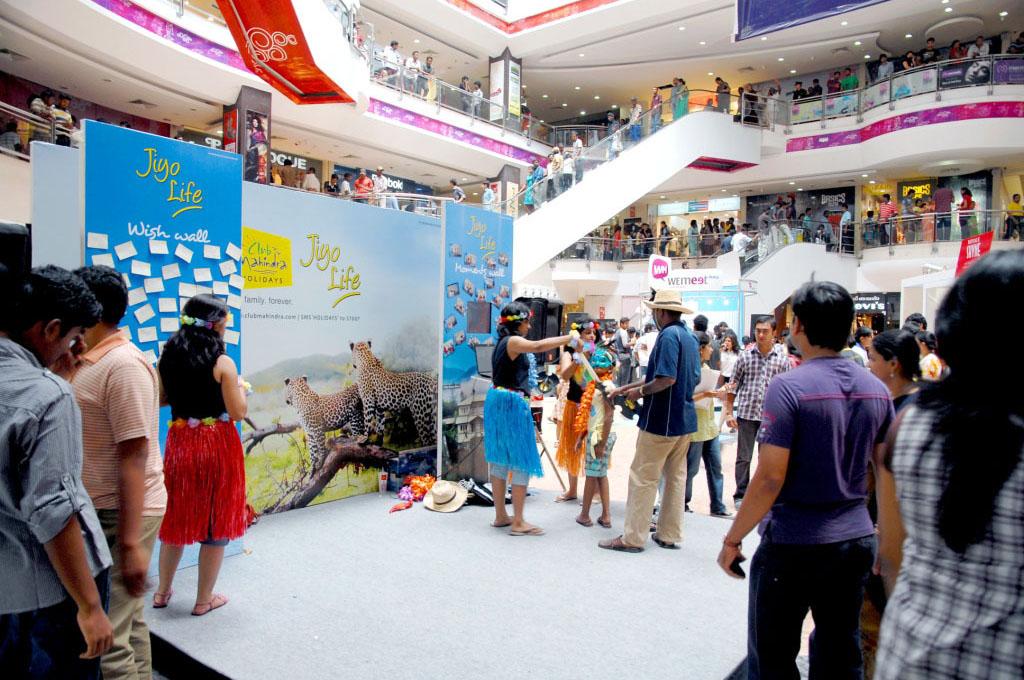
India's marketing landscape has changed dramatically over the last decade. Consumers now discover products through social media, search engines, influencers and digital advertising, but the buying journey does not necessarily end online. Stores, showrooms, malls, exhibitions, events, roadshows and community spaces continue to play an important role in how people experience brands.
This is why offline marketing in India remains relevant even as businesses invest heavily in digital channels.
In fact, the relationship between online and offline is becoming more connected rather than competitive. A 2026 Meta and Retailers Association of India report found that social media influences a significant share of retail purchase decisions, while consumers increasingly move between digital discovery and physical shopping environments.
At the same time, India's physical retail market continues to expand. CBRE reported approximately 8.9 million square feet of retail absorption in 2025, with retailers increasingly investing in experiential flagship stores, kiosks and Gen Z-focused formats designed to increase visits, dwell time and engagement.
The opportunity for brands is therefore not to choose between online and offline marketing. It is to make physical touchpoints more meaningful, consistent, interactive and measurable.
This article explores what offline marketing means in India, why it continues to matter, the major formats brands can use, and how retail branding, BTL Marketing, experiential marketing and Brand Activations can work together.
What Is Offline Marketing?
Offline marketing refers to marketing activities that engage audiences through physical or traditional channels rather than relying exclusively on digital platforms.
These activities can happen inside stores, on streets, in malls, at exhibitions, within residential communities, at corporate locations or during live events.
Traditional offline marketing can include outdoor advertising, print advertising, signage, direct promotions and retail displays. Modern offline marketing has expanded further to include experiential installations, interactive technology, product demonstrations, sampling campaigns, pop-up stores and immersive brand experiences.
The defining characteristic is the physical connection between the consumer and the brand.
A customer can walk into a branded store, interact with a product, speak to a promoter, participate in an activation or experience a demonstration. That physical interaction can make the brand more tangible than an advertisement viewed on a screen.
Why Is Offline Marketing Still Important in India?
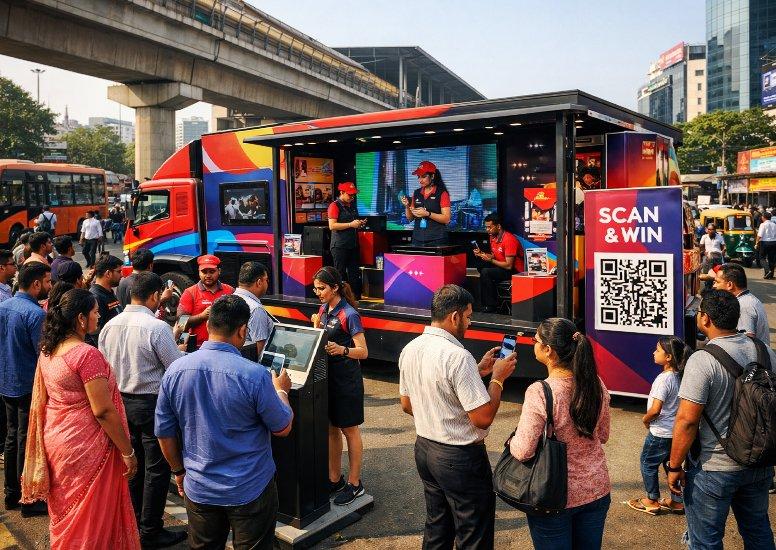
India is a highly diverse market with differences in language, purchasing behaviour, geography, income levels and retail infrastructure. A digital campaign can generate awareness across multiple regions, but physical marketing allows brands to adapt their communication to specific locations and audiences.
Offline marketing also gives brands something digital advertising cannot completely replicate: direct physical experience.
A consumer can test a smartphone, sit inside a car, taste a food product, walk through a property experience centre or interact with a demonstration before making a decision.
This becomes particularly important for categories where touch, trial, demonstration and personal interaction influence purchasing decisions.
The growth of experiential retail reinforces this trend. CBRE's latest retail data shows that Indian retailers are increasingly focusing on experience-driven stores and formats rather than treating physical locations simply as transaction points.
Offline Marketing Is Becoming More Experiential
The biggest change in offline marketing is the transition from visibility to experience.
A traditional shop board tells people where a business is located. A branded storefront can attract attention. But an experiential retail environment can make the customer part of the brand story.
Similarly, a conventional promotional stall may display products, while an experiential activation can allow visitors to test, play, compete, create content or explore the product through technology.
This shift is particularly relevant in 2026 as consumers increasingly value experiences and participation. EY-Parthenon and BookMyShow's 2026 research reported that 78% of Indian consumers surveyed prefer experiences over products, while live-event attendees showed stronger brand recall and purchase intent after interacting with brands on-ground.
Major Types of Offline Marketing in India
Retail Branding and In-Store Branding
Retail stores are among the most important physical brand touchpoints.
Retail branding covers everything from storefront design and fascia branding to interiors, display units, product zones, promotional graphics and customer navigation.
A well-designed retail environment can communicate a brand's personality before a salesperson speaks to the customer.
For multi-location businesses, consistency becomes particularly important. Customers should receive a recognizable brand experience whether they visit an outlet in Delhi, Mumbai, Bengaluru, Pune or a Tier-2 city.
Retail branding can include:
- Storefront and façade branding
- Acrylic and LED branding
- Display units and fixtures
- Product zoning
- Window graphics
- Promotional displays
- Category signage
- In-store communication
- Seasonal campaigns
The objective is not simply to decorate the store. It is to create an environment that makes products easier to discover and the brand easier to remember.
Visual Merchandising
Visual merchandising connects store design with product presentation.
The placement of products, lighting, colours, displays, shelves, mannequins, promotional communication and navigation can influence how customers explore a store.
Research published in the Asia Pacific Management Review has also examined visual merchandising as a tool for positioning multi-brand retail stores and shaping consumer perceptions of store image.
Effective visual merchandising can therefore support both brand communication and the shopping experience.
Seasonal windows, launch displays, product highlight zones and category-based layouts can help retailers guide attention without overwhelming customers.
Signage and Wayfinding
Signage is one of the most visible forms of offline branding.
Outdoor signage can establish presence, while internal signage helps customers navigate a store, mall, showroom or exhibition environment.
Depending on the location and brand identity, businesses may use ACP signs, LED channel letters, glow signs, pylons, fabricated letters, flex graphics, directional signs and digital displays.
Good signage should be visible, readable and consistent with the overall brand identity.
For large retail networks, standardized signage systems can also help maintain consistency across hundreds of outlets.
Experiential Marketing and Brand Activations
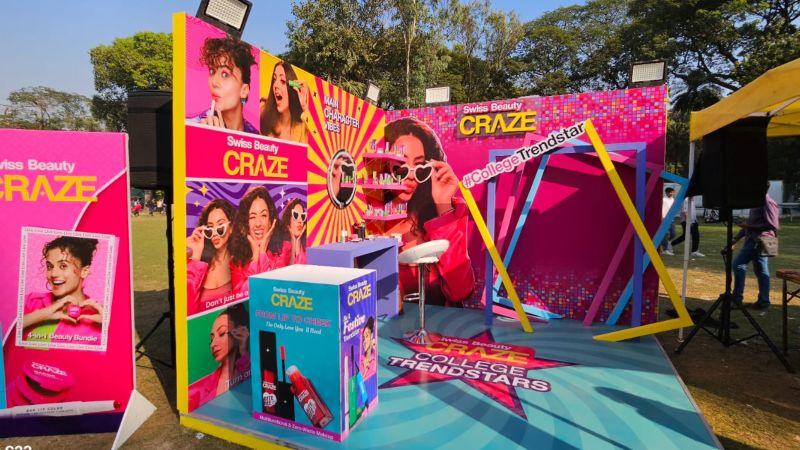
Offline marketing becomes significantly more engaging when consumers are invited to participate.
Experiential marketing creates physical interactions that encourage people to experience a product or brand rather than simply observe an advertisement.
Brand Activations can take many forms.
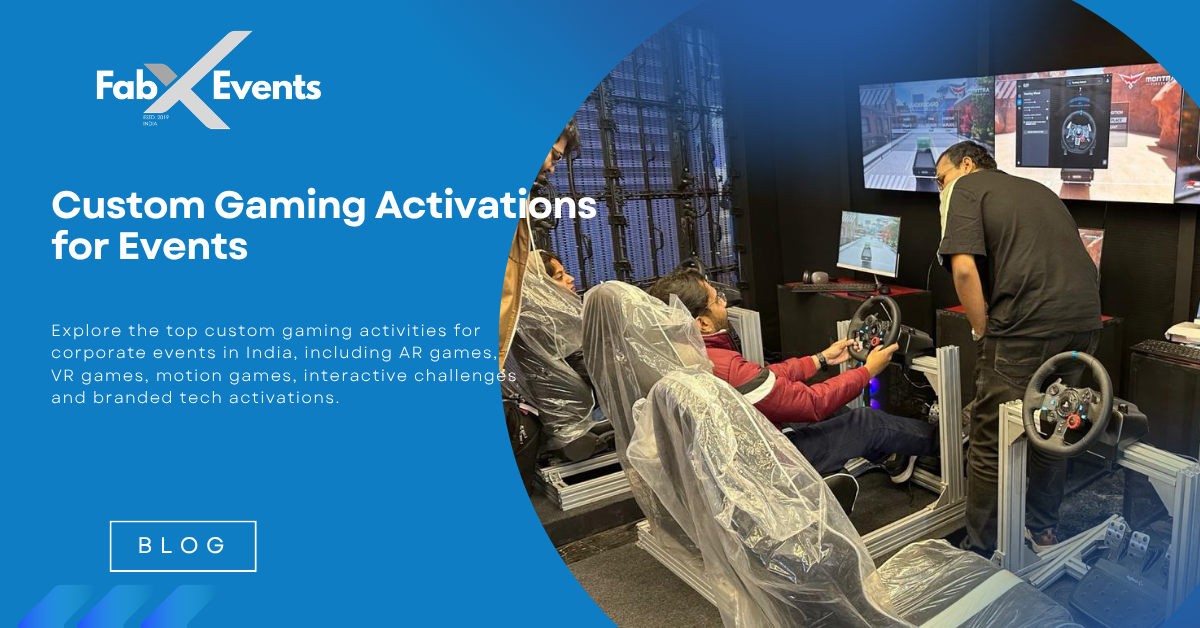
A consumer electronics company could create a hands-on product demonstration zone. A beverage brand might organize sampling. An automobile company could use simulators or interactive technology. A real estate developer might offer VR property tours. A financial brand could create an educational financial-literacy experience.
The objective is to create an interaction that connects the audience with the brand message.
This approach is increasingly relevant in India. EY notes that experiential marketing is evolving from occasional activations into a more strategic brand capability, supported by live events, phygital experiences and immersive formats.
BTL Marketing: Taking the Brand to the Audience
BTL Marketing, or Below-The-Line marketing, focuses on targeted communication and direct audience engagement.
Unlike broad mass-media campaigns, BTL activities can be designed around specific locations, communities, customer groups or occasions.
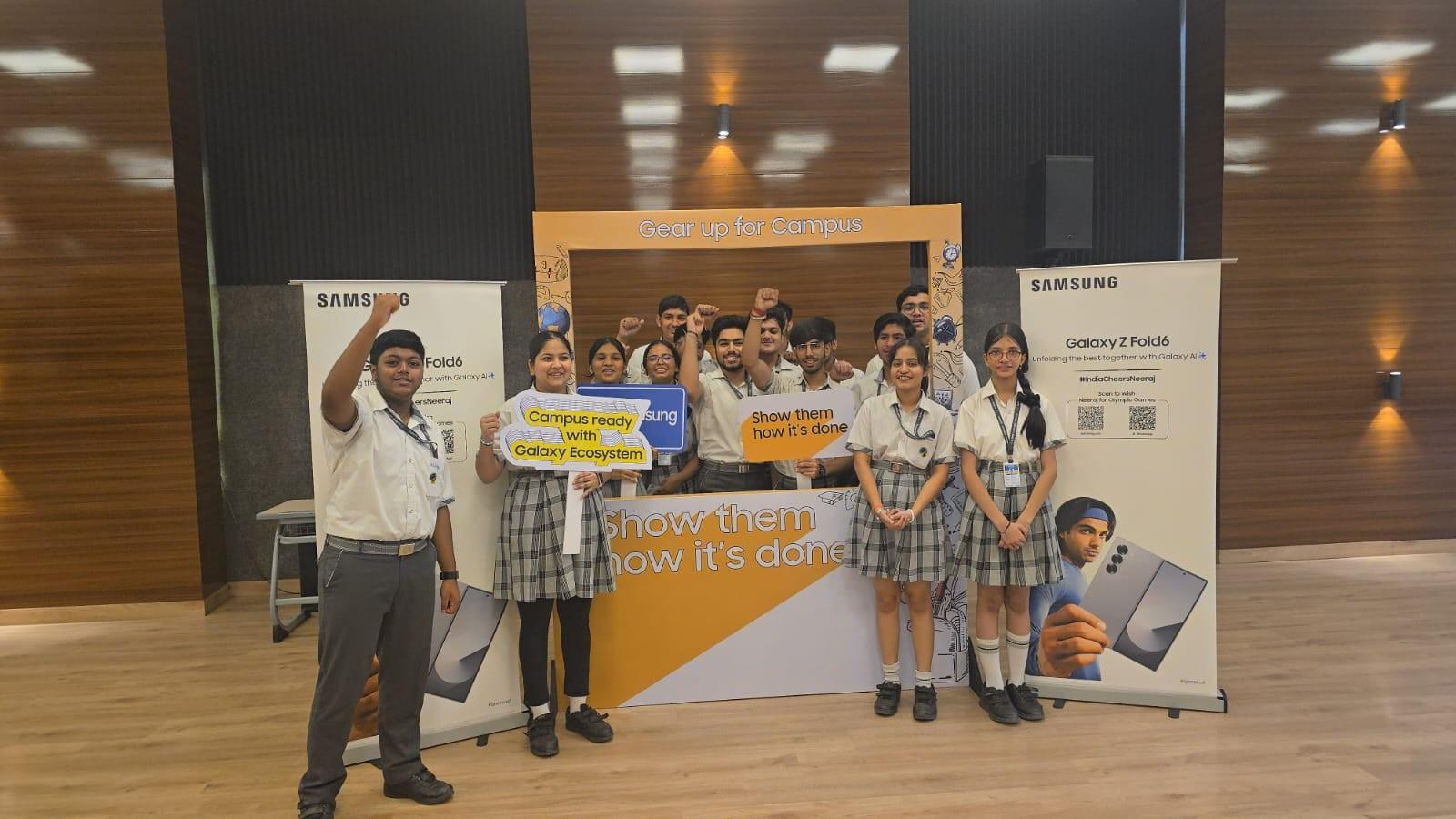
Common examples include mall activations, society activations, roadshows, sampling campaigns, exhibitions, retail promotions, campus activations and product demonstrations.
The advantage is targeting.
Instead of reaching an entire city with a generic message, a brand can identify a specific audience and create an activation around its interests and purchasing behaviour.
For example, a consumer brand targeting families could activate inside residential communities, while a youth-focused technology brand could target colleges, malls and entertainment venues.
Corporate Activations and B2B Offline Marketing
Offline marketing is not limited to consumer businesses.
Corporate Activations are increasingly used for conferences, dealer meets, exhibitions, product launches, employee engagement programmes, business summits and industry events.
B2B audiences may not respond to consumer-style promotions, but they can engage strongly with useful demonstrations and interactive experiences.
Technology companies can showcase AI, robotics, cloud platforms or cybersecurity through immersive demonstrations. Manufacturing companies can use digital twins and simulations to explain industrial processes. Healthcare companies can use interactive medical technology demonstrations.
The focus should be on creating meaningful engagement rather than simply adding technology for visual appeal.
Mall Activations
Malls offer brands a controlled environment with high visitor traffic and multiple opportunities for interaction.
A successful mall activation might combine:
- Product demonstration
- Interactive games
- Sampling
- Photo opportunities
- QR-based contests
- Digital experiences
- Lead generation
- Promotional offers
The activation should be designed around the mall's audience, available footprint, footfall patterns and operating guidelines.
Because mall visitors are often in discovery mode, creative experiences can help brands convert passing attention into participation.
Roadshows and Mobile Marketing
Roadshows allow a campaign to move across multiple locations.
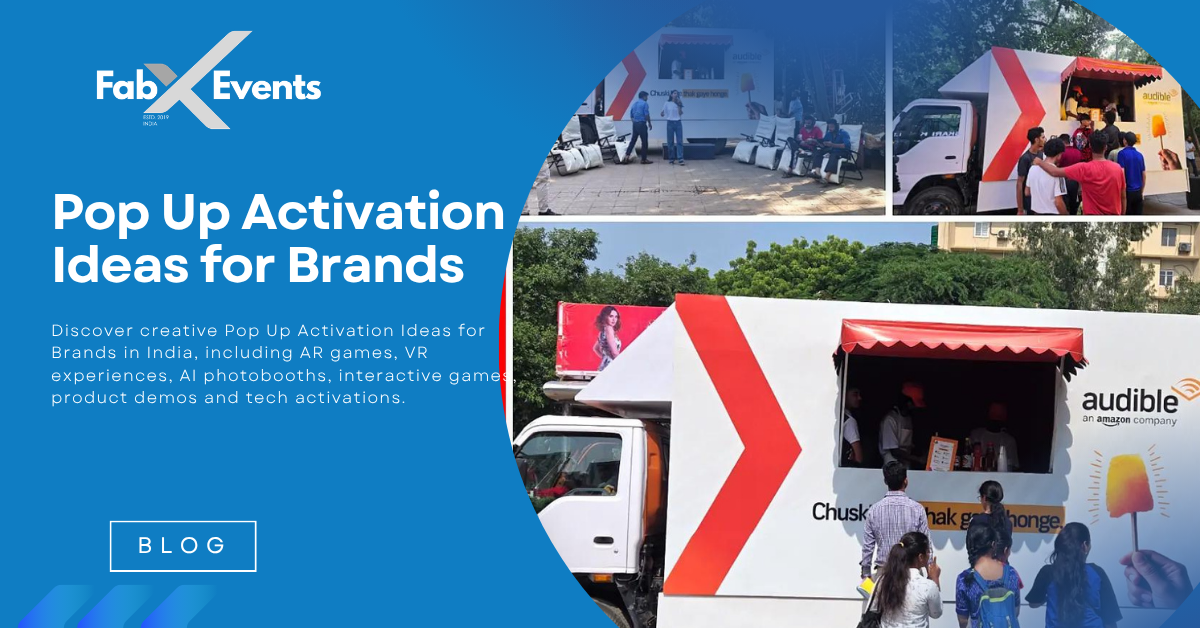
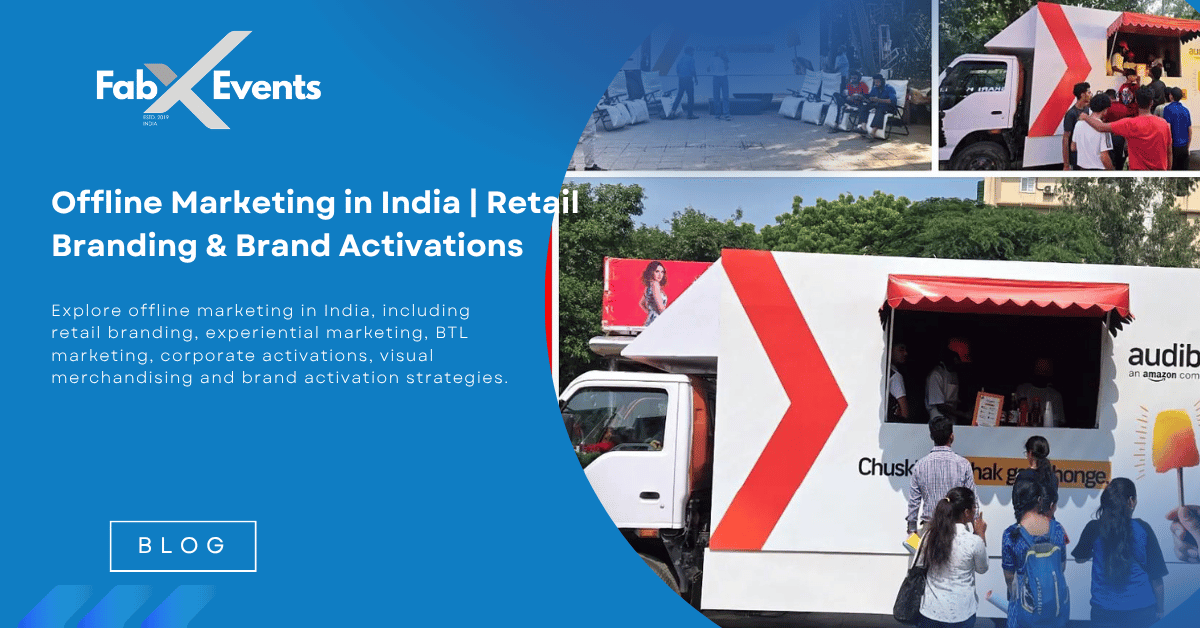
LED vans, branded vehicles, mobile kiosks and portable activation setups can be deployed along selected routes to increase local visibility.
This is particularly useful for regional launches and market expansion.
A roadshow can combine outdoor branding with product demonstrations, sampling, entertainment and digital lead capture.
The strength of the format is mobility: instead of waiting for consumers to visit a particular location, the brand takes the experience to them.
Retail Audits and Maintenance
Offline branding does not end after installation.
For brands operating multiple stores, maintaining consistent execution is essential.
A damaged signboard, faded graphic, broken display light or poorly positioned product display can negatively affect the customer experience.
Retail audits can evaluate whether branding guidelines are being followed across locations. Maintenance teams can then address repairs, replacements, lighting issues, fixture damage and branding deterioration.
This is particularly important for national and multi-city rollouts where small inconsistencies can accumulate across hundreds of outlets.
How Offline Marketing Works With Digital Marketing
Modern offline marketing should not operate in isolation.
A physical activation can drive consumers toward a digital destination through QR codes, WhatsApp, landing pages, social media campaigns, digital contests or registration forms.
Likewise, digital campaigns can drive customers toward physical stores and events.
This creates a connected customer journey.
For example:
A consumer sees a product on Instagram → visits a physical store → participates in an activation → scans a QR code → receives a digital offer → completes the purchase.
This is why the distinction between online and offline is becoming less useful. Indian consumers increasingly move between both environments during the same purchasing journey.
Guerrilla Marketing and Offline Brand Visibility
Guerrilla marketing represents a more unconventional side of offline marketing.
It uses creativity, surprise and unexpected environments to capture attention.
A brand might create an unusual public installation, interactive street experience, temporary intervention or unexpected product demonstration.
However, creativity should always support the marketing objective.
An installation that generates photographs but leaves consumers unable to identify the brand has limited value. Effective guerrilla marketing connects the surprise with a memorable brand message.
How to Measure Offline Marketing
One of the biggest misconceptions is that offline campaigns cannot be measured.
Modern activations can use both physical and digital metrics.
Depending on the campaign, brands can track:
- Footfall
- Product interactions
- Samples distributed
- Leads generated
- Registrations
- QR scans
- Coupon redemptions
- Store visits
- Sales
- Social mentions
- User-generated content
- Dwell time
- Customer feedback
The correct measurement framework depends on the campaign objective.
For a retail branding project, store visits and sales may matter most. For a corporate activation, qualified leads and engagement could be more relevant. For a sampling campaign, trials and conversions may be the primary KPIs.
How to Build an Effective Offline Marketing Strategy
A strong strategy should begin with the customer rather than the physical installation.
First, define the audience and objective. Then identify where the audience can be reached most effectively.
The next step is to choose the right format. Retail branding, signage, BTL Marketing, experiential marketing, roadshows and Brand Activations serve different purposes.
Creative development should then connect the brand identity with the physical experience.
Finally, execution must cover fabrication, logistics, staffing, installation, permissions, quality control and reporting.
A useful framework is:
Audience → Objective → Location → Experience → Execution → Measurement → Optimization.
This approach prevents brands from spending heavily on physical visibility without a clear business purpose.
Trends Shaping Offline Marketing in India in 2026
Experience-Led Retail
Physical stores are increasingly being designed as destinations rather than simple points of sale. CBRE's latest India retail data highlights growing demand for experiential flagship stores, kiosks and Gen Z-oriented formats.
Phygital Experiences
Brands are combining physical experiences with digital technology, creating journeys that move seamlessly between stores, events, websites, social media and messaging platforms.
Interactive Technology
AR, VR, AI, digital signage, interactive displays, gamification and immersive installations can make physical marketing more engaging.
Regional Expansion
As brands expand beyond major metros, offline marketing can help create localized visibility and establish trust in new markets.
Purposeful Experiences
The focus is shifting from spectacle alone toward experiences that provide value, entertainment, education or meaningful interaction. Industry research increasingly points toward participation and experience as important drivers of brand engagement.
Why Businesses Need an Integrated Offline Marketing Partner
Executing a large offline campaign involves much more than designing a poster or building a kiosk.
A professional partner may need to manage strategy, creative design, site surveys, fabrication, printing, logistics, permissions, installation, staffing, maintenance and reporting.
For multi-location campaigns, vendor coordination becomes even more complex.
An integrated offline marketing partner can provide a single execution framework across retail branding, visual merchandising, signage, BTL campaigns, experiential marketing and corporate activations.
This can help businesses maintain brand consistency while reducing coordination between multiple vendors.
Industries That Can Benefit From Offline Marketing
Almost every customer-facing industry can benefit from physical brand experiences.
FMCG companies can use sampling and retail activations. Fashion brands can invest in visual merchandising and experiential stores. Electronics companies can create product demonstration zones. Automotive brands can use roadshows and experience centres. Real estate companies can combine site branding with immersive property experiences.
Healthcare, pharmaceuticals, education, hospitality, QSR, financial services, technology and manufacturing businesses can also use targeted offline experiences to strengthen awareness and engagement.
Conclusion
Offline marketing in India is not disappearing because digital marketing is growing. Instead, the two channels are becoming increasingly connected.
Digital platforms can create discovery and awareness, while physical environments provide opportunities to experience, test, trust and purchase.
Retail branding creates consistency. Visual merchandising improves product presentation. BTL Marketing enables targeted engagement. Experiential marketing creates participation. Brand Activations turn campaigns into experiences, while guerrilla marketing can add surprise and cultural relevance.
The most effective offline strategies therefore do not treat physical marketing as an old-fashioned alternative to digital advertising. They treat it as an essential part of a connected customer journey.
For Indian brands in 2026, the opportunity is clear: create physical experiences that are relevant, interactive, measurable and easy to connect with digital channels. When executed strategically, offline marketing can turn a store, event, street, mall or community space into a powerful brand-building environment.
Author Bio
Khushboo is a hospitality professional with over 12 years of experience and a degree in Hospitality. As the Corporate Sales Lead at FabX Events, She works closely with businesses, event organisers, and enterprises to provide the right technology rental solutions for conferences, exhibitions, training programmes, corporate events, and business projects. Passionate about technology and event innovation, Khushboo stays up to date with the latest hardware trends and shares practical insights, industry best practices, and expert advice through the FabX Events blog.
FAQs