 VR & AR Blogs
360° Property Tours & VR for Developers
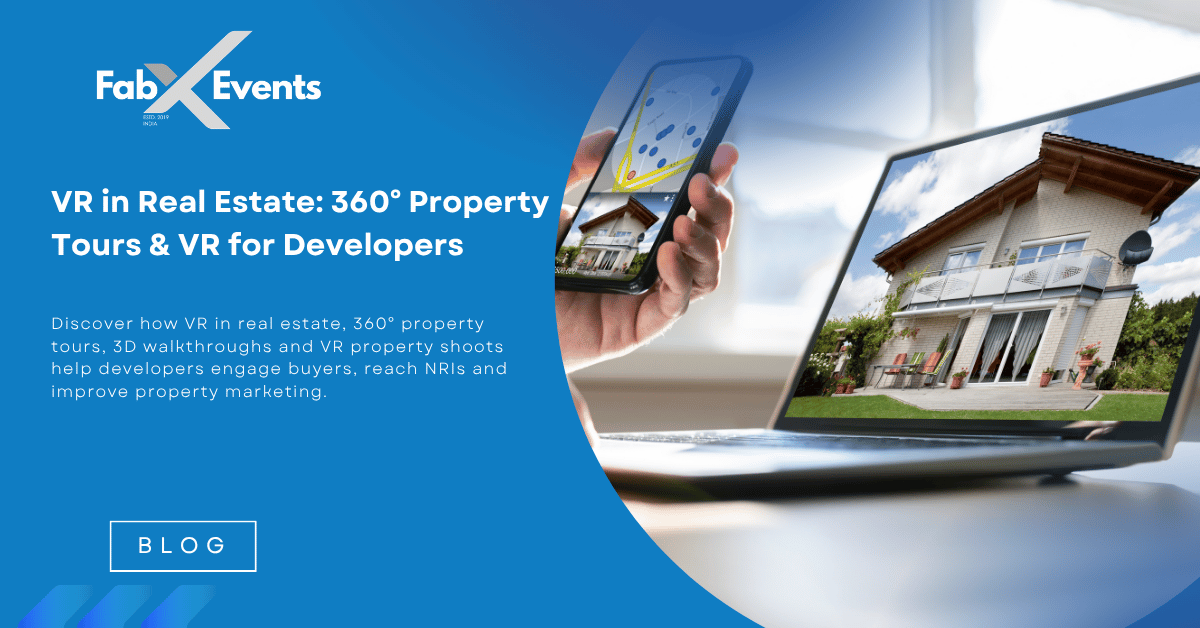
Discover how VR in real estate, 360° property tours, 3D walkthroughs and VR property shoots help developers engage buyers, reach NRIs and improve property marketing.
VR in Real Estate: How 360° Property Tours and VR Are Transforming Property Marketing
Real estate marketing has moved far beyond brochures, hoardings and static property photographs. Today's buyers research properties online before deciding whether a physical site visit is worth their time. They compare floor plans, explore amenities, watch walkthrough videos, check locations and increasingly expect a more realistic understanding of a property before speaking with a sales representative.
This shift has created a major opportunity for developers, builders, brokers and real estate marketers: immersive property experiences.
Technologies such as 360° virtual tours, 3D property tours, virtual staging and VR allow potential buyers to explore homes and commercial spaces digitally. Instead of looking at a few carefully selected photographs, buyers can move through rooms, examine layouts and understand how different spaces connect.
For developers, this is particularly valuable when marketing premium properties, large projects, commercial developments or under-construction projects where the finished space may not yet be available for a physical walkthrough.
A professional 360° property shoot can turn a conventional property website into an interactive experience. A more advanced 3D tour can provide spatial navigation, measurements and floor-plan information, while a VR experience can take buyers into a digitally created environment where they can experience a proposed property before it physically exists.
The fundamental difference is simple:
A 360° tour helps buyers explore a property.
A 3D tour helps buyers understand the property.
VR allows buyers to experience the property immersively.
The right approach depends on the project, audience, budget and sales objective.
What Is a 360° Virtual Property Tour?
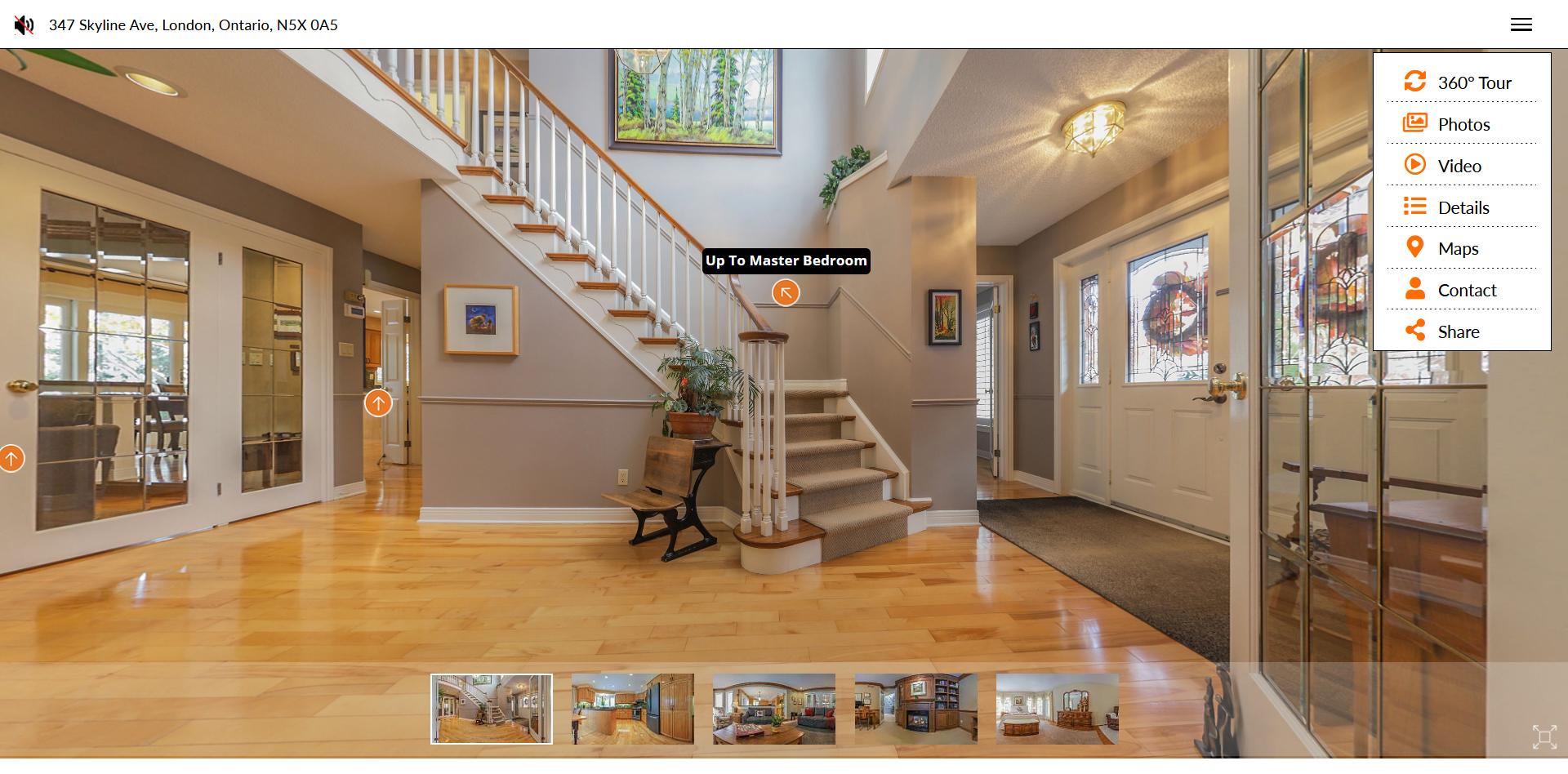
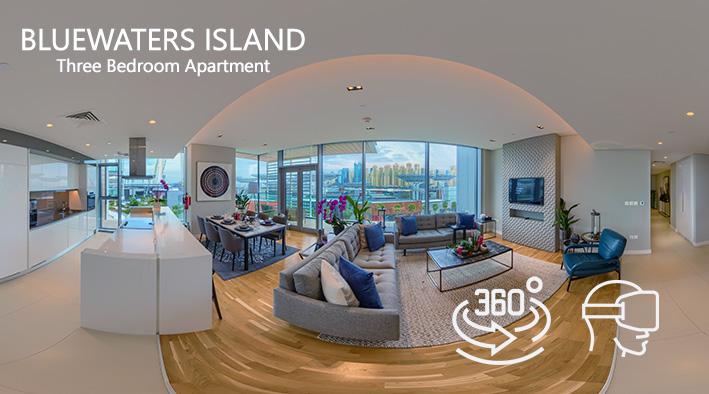
A 360° virtual property tour is an interactive digital representation created using panoramic photography or other spatial-capture techniques.
Instead of viewing a single photograph, the user can look around the entire captured environment. Multiple viewpoints can then be connected so that the viewer can navigate from a living room to a bedroom, kitchen, balcony or other location.
Modern virtual tours can also include interactive elements such as floor plans, information hotspots, videos, specifications, enquiry buttons and calls to action.
This makes a virtual tour more than a collection of photographs. It becomes a digital property experience that can remain available 24/7.
For developers, the advantage is especially clear: a prospective buyer can explore a property from a smartphone, tablet or computer without waiting for a sales representative or visiting the project immediately. Modern 3D-tour platforms can also combine immersive walkthroughs with photographs, floor plans, measurements and other property information.
Why VR in Real Estate Is Becoming More Important
The real-estate buying journey increasingly begins online. Buyers may discover a project through search engines, social media, property portals, digital advertising or a developer's website.
At this stage, the challenge is converting online interest into meaningful enquiries.
Static images can show what a room looks like, but they do not always communicate flow, scale or spatial relationships effectively. A virtual property experience allows the buyer to spend more time exploring the space and developing a better understanding of the property.
This is where VR in real estate becomes particularly useful.
A developer can create an immersive experience around an existing property, a furnished sample apartment or even a digitally designed future development. Instead of telling the customer what the property will look like, the sales team can allow the customer to experience it.
This is particularly powerful for luxury residential projects, villas, commercial developments, hospitality projects and properties that are still under construction.
360° Virtual Tour vs 3D Property Tour vs VR
Although these terms are often used interchangeably, they represent different experiences.
360° Virtual Tour
A 360° virtual tour is generally based on panoramic imagery captured from specific points within a property. Users can look around and navigate between locations.
It is comparatively accessible because it can be viewed through a web browser without requiring a VR headset.
It works particularly well for completed apartments, show flats, offices, hotels, retail spaces and properties that can be physically photographed.
3D Property Tour
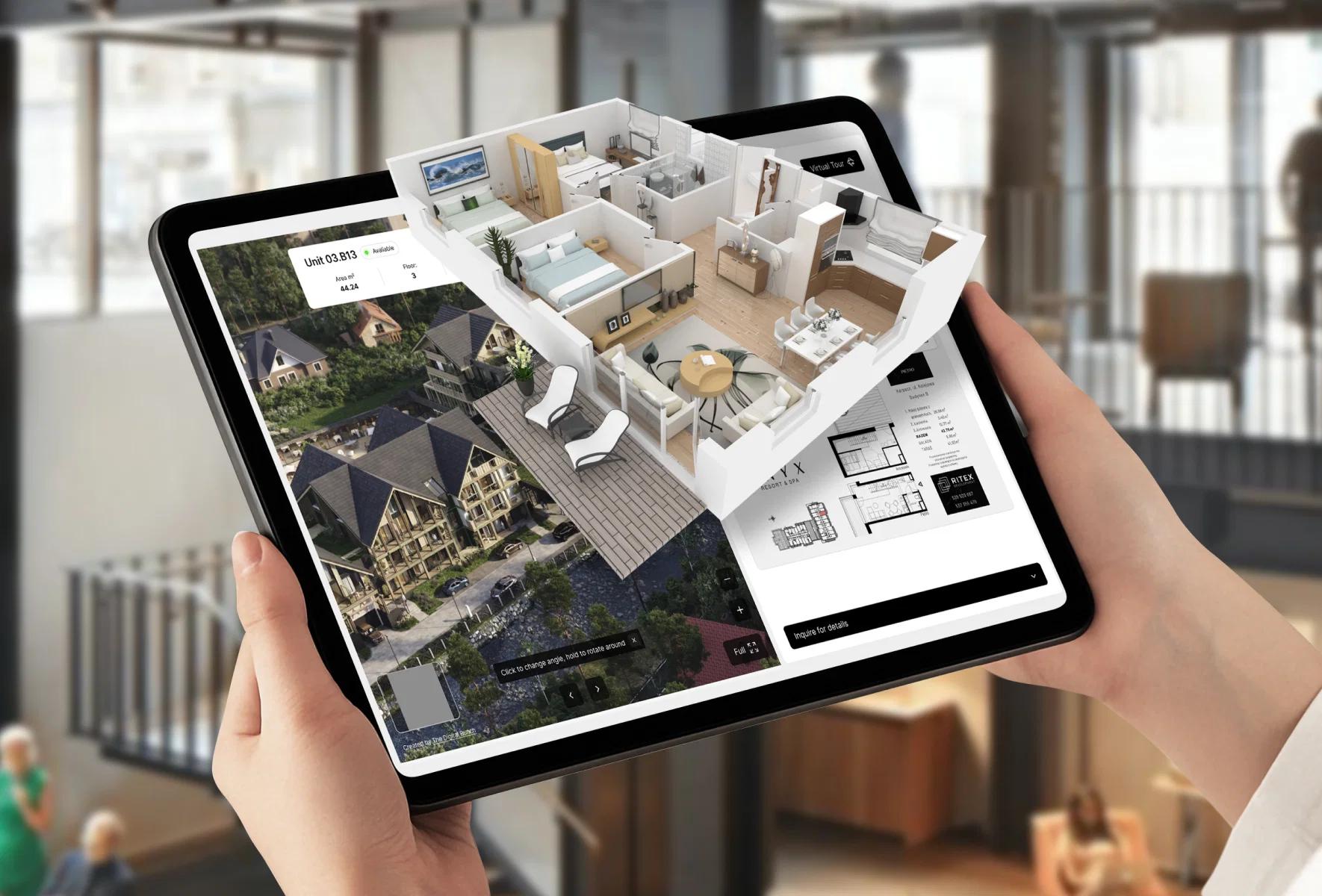
A 3D property tour provides a more spatial representation of the environment. Depending on the technology, it can include floor plans, measurements, navigation tools and additional property information.
This makes 3D tours useful when buyers need to understand the relationship between rooms and the overall layout.
Platforms such as Matterport, for example, combine immersive tours with floor plans, measurements and other property assets generated from a digital capture.
VR Property Experience
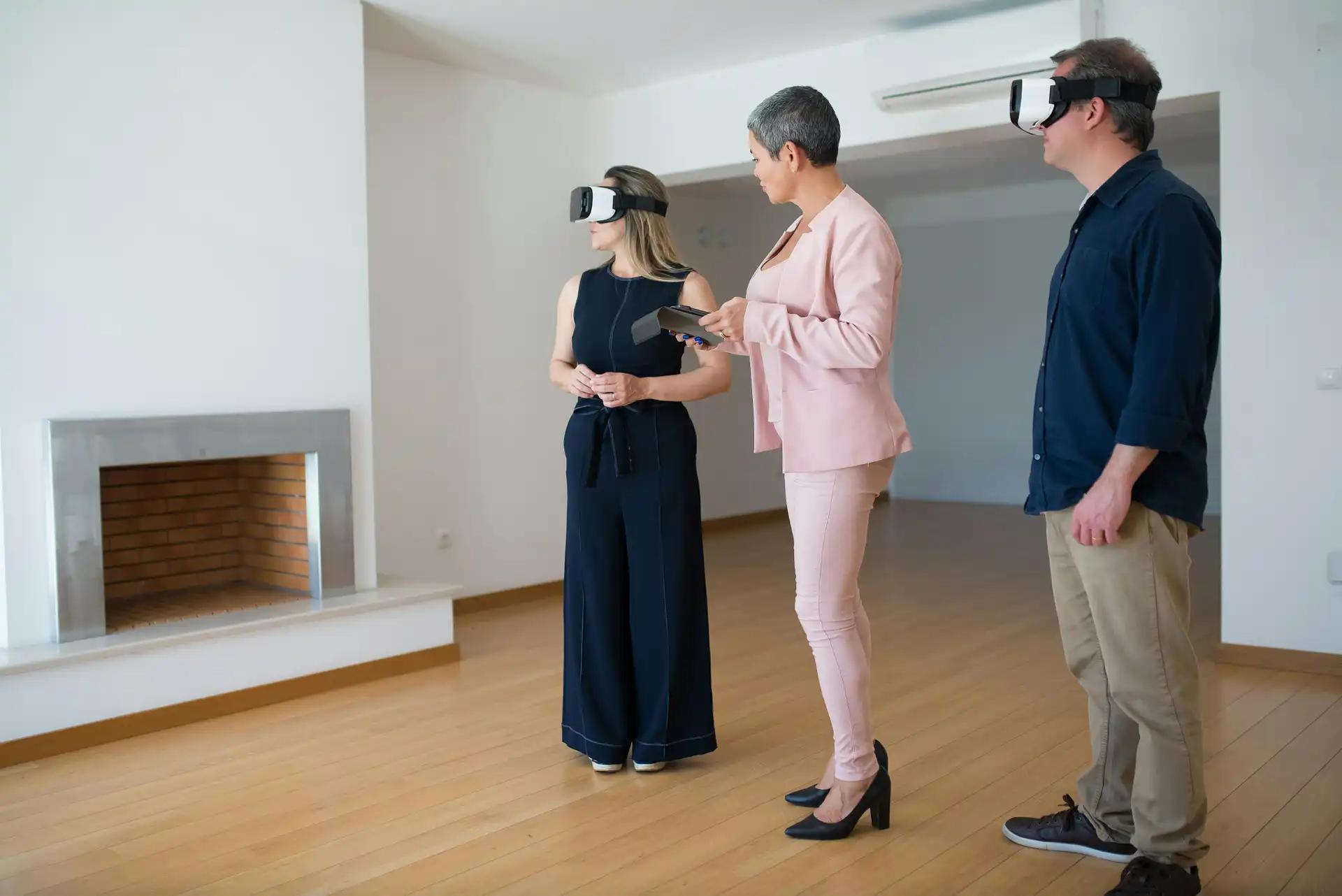
A VR experience takes immersion another step further.
Instead of viewing the property through a normal screen, the buyer wears a VR headset and enters a digital environment. This can be particularly valuable when the property is under construction or when the developer wants to showcase a future interior, apartment configuration, villa or amenity.
For premium projects, VR can become part of the sales-gallery experience, allowing customers to virtually enter spaces that may not yet physically exist.
How 360° Property Shoots Work
A professional 360 property shoot requires more planning than simply placing a camera inside a room.
The process generally begins with preparing the property. Furniture, lighting, decorative elements and unwanted objects are arranged to ensure that the space looks polished from every direction.
A 360° camera is then positioned at carefully selected points throughout the property. The camera captures panoramic imagery that can later be processed and connected into an interactive walkthrough.
The photographer must consider camera height, lighting, reflections, windows, mirrors, people, cables and other elements that could negatively affect the final experience.
After capture, the imagery is stitched, processed and connected. Navigation points are created so users can move naturally between rooms.
Additional elements can then be incorporated, such as floor plans, property specifications, videos, enquiry forms, brochures, location information and site-visit buttons.
The result is a shareable digital property experience that can be embedded directly into a website or used across digital marketing campaigns.
VR Property Tours for Under-Construction Projects
One of the strongest applications of immersive technology is selling properties before construction is complete.
Traditional marketing relies heavily on architectural renders, sample images, floor plans and brochures. These are useful, but many buyers struggle to translate drawings and renders into a mental picture of the final space.
VR can bridge that gap.
Developers can create a digitally modelled apartment or villa and allow buyers to virtually walk through it. Interior finishes, furniture, lighting and other design elements can be visualized before the physical property exists.
This approach is particularly useful for:
Residential Developments
Buyers can experience apartment layouts, bedrooms, kitchens, balconies and living spaces before possession.
Luxury Villas
Large villas can be presented through immersive walkthroughs covering multiple floors, gardens, pools and premium amenities.
Commercial Real Estate
Office spaces, retail environments and commercial developments can be visualized before completion, helping businesses understand potential layouts and usage.
Hospitality Projects
Hotels and resorts can use immersive experiences to showcase rooms, restaurants, event spaces, spas and recreational facilities.
The key benefit is not simply visual appeal. It is improved communication between the developer and buyer.
Helping NRI and Overseas Buyers
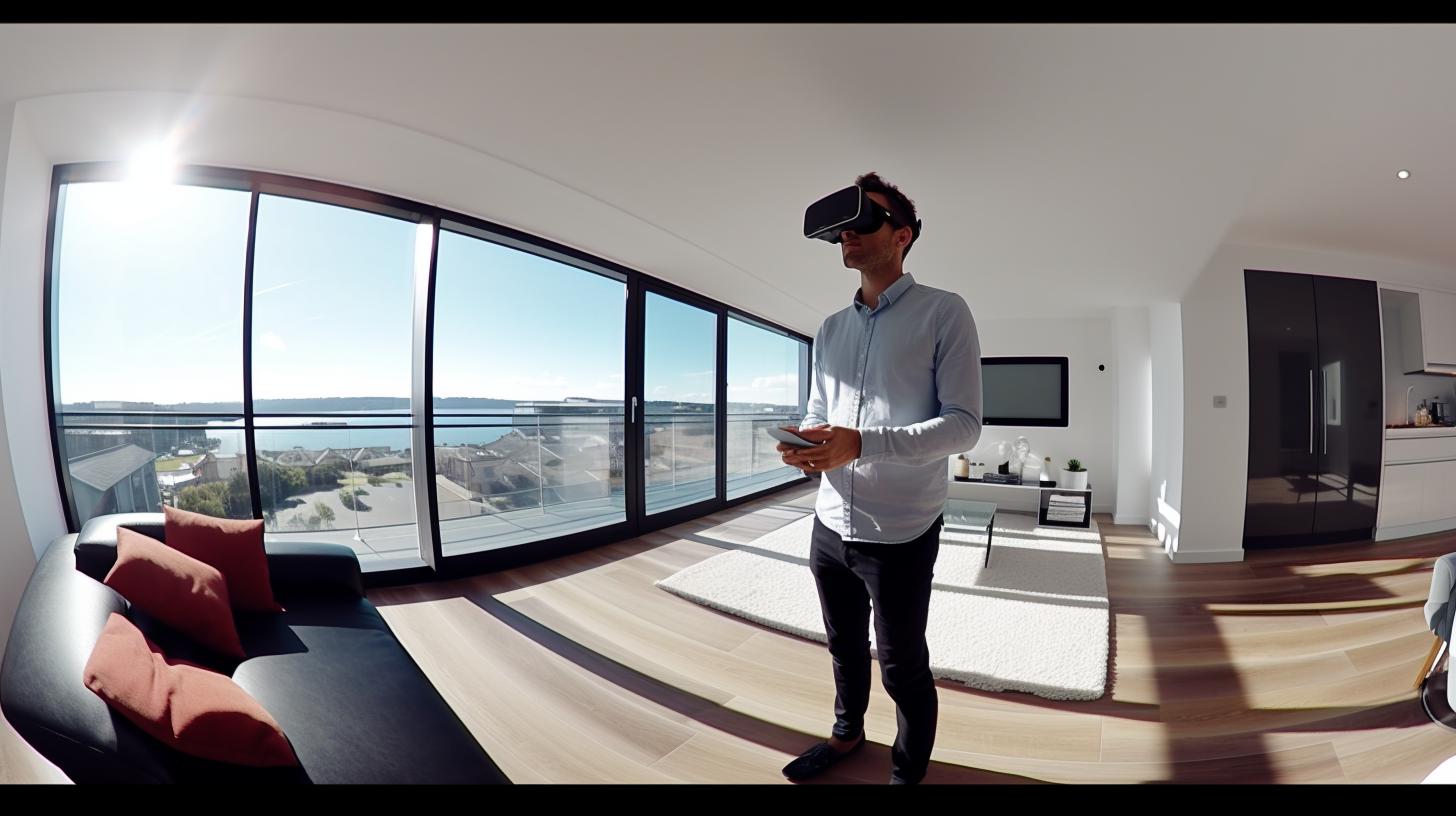
One of the most valuable applications of virtual property experiences is remote property marketing.
An NRI buyer may be interested in an apartment in Mumbai, Delhi, Bengaluru, Hyderabad or another Indian city but may not be able to visit immediately.
A 360° virtual tour allows the buyer to explore the property remotely before arranging travel.
This does not necessarily eliminate the need for a physical visit. Instead, it can help the buyer shortlist projects and properties more efficiently.
For international buyers, a well-produced virtual experience can also be combined with video calls, digital brochures, floor plans, location maps and online consultations.
The buyer can first explore the property independently and then speak to the sales team about specific questions.
This creates a more informed sales conversation.
Combining 360° Photography With Other Content
A successful real-estate virtual experience does not have to rely on 360° photography alone.
Developers can combine different forms of content to create a richer digital sales environment.
A property website might include a 360° walkthrough alongside drone footage showing the surrounding development. Interactive floor plans can help users understand layouts, while hotspots can provide information about amenities, materials and specifications.
Virtual staging can also be used to demonstrate how an unfurnished space could look when furnished. However, digitally enhanced imagery should accurately communicate what is conceptual and what is physically delivered to avoid creating unrealistic expectations.
For under-construction properties, CGI and 3D visualization can be combined with VR to create an experience that communicates both the architecture and the intended lifestyle.
Where Can Developers Use Virtual Property Tours?
The applications extend beyond residential apartments.
Apartments
360° tours can showcase sample flats, completed apartments and model homes.
Villas
Large properties benefit from immersive navigation because buyers can understand the relationship between floors, rooms and outdoor spaces.
Commercial Offices
Businesses can explore office layouts remotely before scheduling a physical inspection.
Retail Spaces
Retailers can evaluate store environments, layouts and visibility.
Hotels and Resorts
Hospitality brands can showcase guest rooms, restaurants, conference facilities and amenities.
Real Estate Sales Galleries
A VR station can allow visitors to experience multiple configurations or properties from one physical sales centre.
Under-Construction Projects
CGI-based VR experiences can visualize the future property before construction is complete.
How VR Property Shoots Support Real Estate Sales
The strongest value of immersive property technology is its ability to support the sales funnel.
At the awareness stage, a virtual experience can make a property listing more distinctive.
During consideration, buyers can explore the property in greater detail.
During qualification, the experience can help potential customers determine whether the property actually matches their requirements.
Finally, a strong call to action can move the user toward contacting the sales team or scheduling a site visit.
Interactive 3D tours are also increasingly used as digital marketing assets because they can be shared, embedded on websites and repurposed across online channels.
How to Measure ROI From a Virtual Property Experience
Investing in immersive technology should not be based only on how impressive the experience looks.
Developers should establish measurable objectives.
Important metrics can include:
Tour views and unique visitors
Average tour engagement time
Most-viewed rooms or hotspots
Brochure downloads
Enquiry form submissions
WhatsApp or phone enquiries
Site-visit bookings
Lead source
Virtual-to-physical visit conversion
Repeat visits
For sales galleries, developers can additionally track the number of visitors who use the VR experience and whether those visitors subsequently interact with sales representatives.
This turns immersive technology from a novelty into a measurable marketing tool.
Common Mistakes to Avoid
A poorly executed virtual tour can have the opposite effect of what the developer intended.
The first mistake is poor image quality. Blurry or badly stitched panoramic photographs immediately reduce trust.
The second is inadequate preparation. A 360° camera captures the entire environment, so clutter that might be outside a conventional photograph can become visible.
Another common mistake is creating a tour without a clear navigation structure. Users should be able to understand where they are and where they can go next.
Slow loading is another serious issue. A visually impressive experience that takes too long to load can lose mobile users.
Finally, developers should avoid making the virtual experience purely decorative. Every interactive element should serve a purpose, whether that is explaining a feature, showing a specification or encouraging an enquiry.
Mobile Compatibility and Hosting Matter
Not every buyer will own a VR headset.
That is why a strong real-estate immersive strategy should provide multiple access options.
A browser-based 360° tour can serve the largest audience because it can be accessed through phones, tablets and computers. A VR version can then provide a premium experience in sales offices, exhibitions or property showcases.
The experience should also be optimized for mobile performance. Large image files, complicated interfaces and slow-loading content can reduce engagement.
The best approach is therefore not to force every visitor into VR. Instead, developers can provide a progression:
Website → 360° Tour → 3D Exploration → VR Experience → Sales Consultation → Site Visit.
Choosing Between 360° Property Shoot and VR
There is no single solution that works for every project.
A 360° property shoot is ideal when a developer wants an accessible online walkthrough of an existing property.
A 3D property tour is useful when spatial understanding, floor plans and measurements are important.
A VR property experience is particularly valuable for premium projects, sales galleries, exhibitions and under-construction properties where buyers need to experience a proposed environment.
For many developers, the most effective strategy is a combination of these technologies rather than choosing only one.
The Future of VR Property Shoots
The next generation of real-estate marketing is likely to become increasingly interactive.
Virtual tours are already moving beyond simple room-to-room navigation. Digital twins, AI-powered assistants, interactive configurations and increasingly realistic 3D environments can create more personalized property experiences.
Future buyers may be able to change furniture, finishes, room configurations and design options while exploring a property digitally.
For developers, this could transform immersive technology from a marketing asset into a broader sales and visualization platform.
Research and emerging technologies are also pushing virtual environments toward more realistic spatial exploration and browser-based experiences, making immersive property visualization increasingly accessible beyond specialized hardware.
Conclusion
VR in real estate is not simply about making property marketing look futuristic. Its real value lies in helping buyers understand, explore and experience properties before committing time to a physical visit.
A 360° virtual property tour can make an existing property accessible from almost anywhere. A 3D tour can provide deeper spatial understanding, while VR can place buyers inside a digitally created property experience.
For builders and developers, these technologies can support residential projects, villas, commercial spaces, hospitality developments, sales galleries and under-construction properties.
They can also help developers reach NRI and overseas buyers who may not be able to visit immediately.
The most successful implementation is not necessarily the one with the most technology. It is the one that makes the buying journey clearer, more convenient and more engaging.
When combined with professional photography, drone footage, floor plans, CGI, virtual staging and strong calls to action, VR property shoots can transform a property website from a digital brochure into an interactive sales environment.
The objective should always remain the same: give buyers more confidence before they take the next step.
Author Bio
Khushboo is a hospitality professional with over 12 years of experience and a degree in Hospitality. As the Corporate Sales Lead at FabX Events, She works closely with businesses, event organisers, and enterprises to provide the right technology rental solutions for conferences, exhibitions, training programmes, corporate events, and business projects. Passionate about technology and event innovation, Khushboo stays up to date with the latest hardware trends and shares practical insights, industry best practices, and expert advice through the FabX Events blog.
FAQs