 Corporate Brand Activations
Pop Up Activation in India
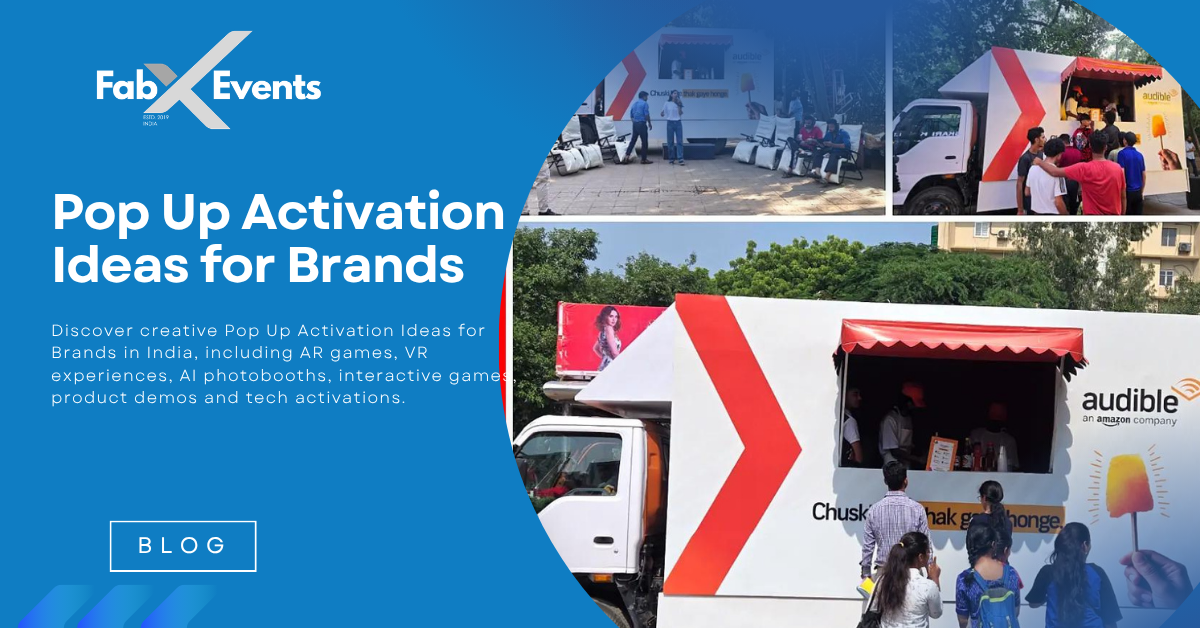
Discover creative Pop Up Activation Ideas for Brands in India, including AR games, VR experiences, AI photobooths, interactive games, product demos and tech activations.
Pop Up Activation Ideas for Brands in India: AR, VR, AI & Interactive Experiences
Brands in India are increasingly looking for ways to move beyond conventional advertising and create experiences that audiences can see, touch, explore and participate in. This has made Pop Up Activations an increasingly useful format for product launches, retail campaigns, seasonal promotions, experiential marketing and customer engagement.
A pop-up can temporarily transform a mall space, high street, corporate campus, exhibition area, college, residential community or event venue into a branded environment. Instead of communicating only through posters or conventional displays, brands can invite visitors to experience a product, play a game, create content, participate in a challenge or explore an immersive digital environment.
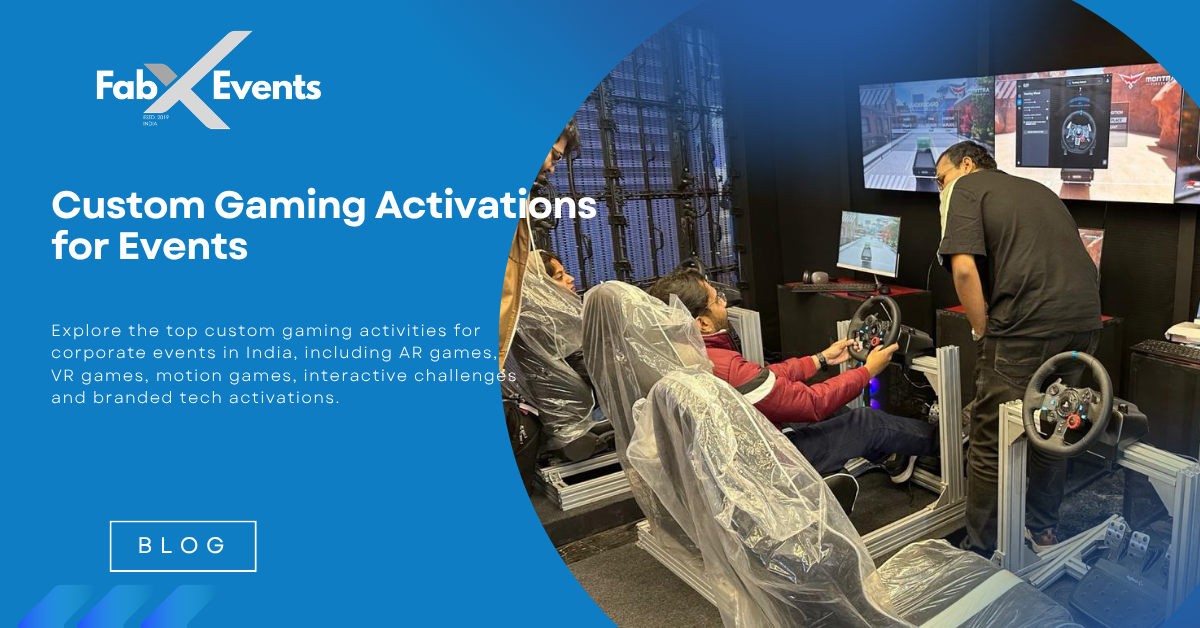
The possibilities now extend far beyond traditional promotional kiosks. Brands can incorporate AR Games, VR Games for Brands, AI Photobooths, Motion Games, interactive touchscreens, projection-based experiences, holographic displays, 360° video booths, gamified product demonstrations and Custom Game Activations.
This shift reflects a wider change in Indian experiential marketing. An EY-Parthenon and BookMyShow report published in March 2026 estimated India's live-events market at approximately ₹13,000 crore and reported that 78% of surveyed Indian consumers preferred experiences over products. The report also found that 59% of surveyed live-event attendees recalled brands they engaged with on-ground.
For brands, the opportunity is therefore not simply to create a temporary structure. The objective is to create a temporary experience that gives people a reason to stop, participate and remember the brand.
What Is a Pop Up Activation?
A Pop Up Activation is a temporary branded experience created at a specific location for a defined campaign period.
Unlike a permanent store or conventional advertising display, a pop-up is designed around a particular objective, audience and moment. It could be used for a new product launch, festive campaign, seasonal promotion, market test, brand awareness campaign or customer engagement program.
Modern pop-ups can combine physical and digital experiences. A visitor might enter a branded space, interact with an AR Game, test a product, participate in a VR experience, take an AI-generated photograph and then receive a digital reward or promotional offer.
Current Indian activation agencies are increasingly combining pop-ups with product demonstrations, AR/VR, games, photo experiences, QR journeys and lead capture.
Why Are Pop Up Activations Becoming Important for Brands?
Traditional advertising can create awareness, but an activation can give consumers an opportunity to interact directly with the brand.
A well-designed pop-up can create several touchpoints within one physical environment. A visitor may first notice the installation, then participate in a game, discover the product, create social content and speak with a brand representative.
This makes the format particularly useful for brands that want to demonstrate rather than simply describe their products.
The temporary nature of a pop-up can also create a sense of occasion. A limited-time experience in a mall or high-footfall location can encourage people to visit while the campaign is active.
The strongest campaigns, however, are not based solely on location or visual design. Creative concept, audience relevance, visitor flow, interaction design, staffing and measurement all contribute to the overall experience.
1. AI Photo Booth Pop Up Activation
An AI Photo Booth can turn a conventional branded selfie station into a personalized experience.
Visitors can photograph themselves and receive an AI-generated transformation based on the campaign theme. Depending on the brand, this could include futuristic characters, professional identities, fantasy environments, fashion transformations, cultural looks or product-related themes.
For a fashion brand, the activation could become an AI styling experience. A food brand could transform visitors into chefs or food-themed characters. A technology company could use futuristic AI transformations.
The resulting content can be shared digitally, helping extend the physical pop-up into social media.
2. AR Interactive Games
AR Games can add a digital layer to a physical pop-up environment.
Visitors can scan markers, QR codes or products to unlock challenges, characters, clues or digital information.
An FMCG brand could create an AR product hunt where participants discover virtual objects around the activation. A technology brand could create an AR challenge demonstrating a product feature. A lifestyle brand could create a themed digital treasure hunt.
Because the game can be designed around the campaign, AR is particularly useful for Custom Corporate Activations.
The gameplay, visuals, questions, rewards and storytelling can all be connected to the brand.
3. VR Games for Brands
VR can turn a compact pop-up into an immersive experience.
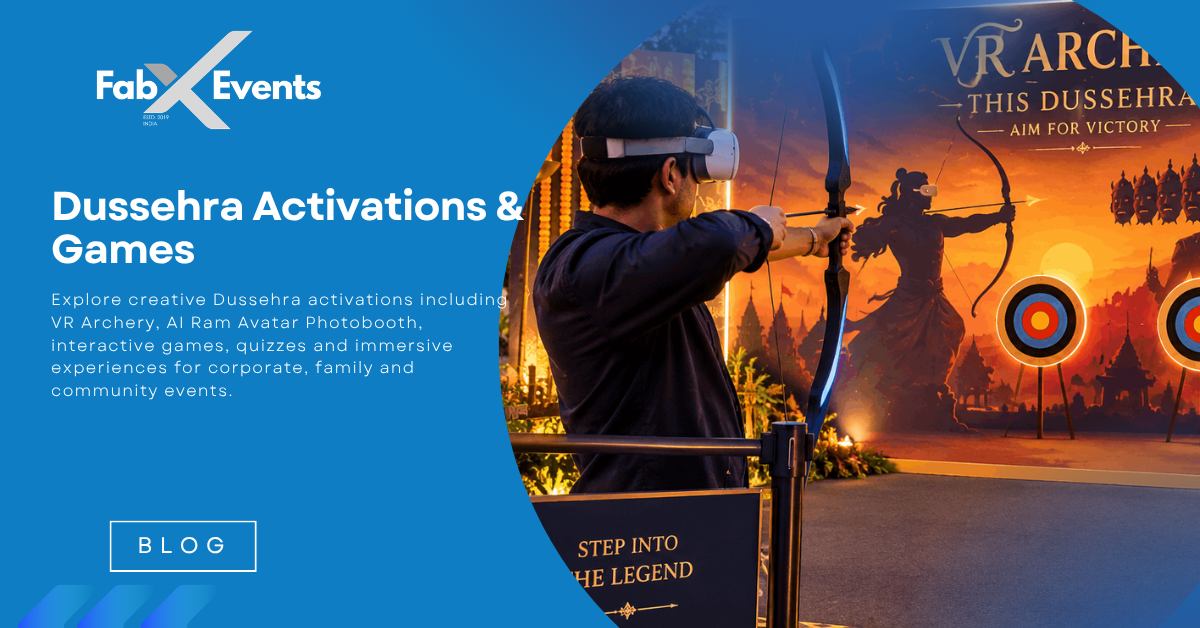
A visitor wearing a VR headset can enter a virtual environment that would otherwise be impossible to recreate physically within a mall, exhibition or corporate space.
Automotive brands can use VR driving experiences. Real estate companies can offer virtual property tours. Travel brands can create destination experiences. Industrial companies can demonstrate processes or training environments.
For campaigns where a completely custom VR experience is not required, ready-to-deploy VR equipment can also be used as part of a branded activation.
The important consideration is matching the VR experience to the campaign rather than using VR simply because it is technologically impressive.
4. Motion Games and Gesture-Controlled Activations
Motion Games are another effective option for high-footfall pop-ups.
Participants can control games through body movement, gestures, cameras or tracking technology rather than conventional controllers.
A sports brand could create a motion-based cricket, football or basketball challenge. A beverage brand could develop a reaction game. A technology company could showcase gesture recognition through an interactive challenge.
Motion-based experiences can be particularly useful where quick participation is important. Visitors can watch someone else play, understand the concept and then participate themselves.
This makes Motion Games suitable for malls, exhibitions, corporate campuses and public-facing campaigns.
5. Gamified Product Demonstration
Product demonstrations do not always need to involve a salesperson explaining features.
A product can become the central mechanic of a game.
For example, a consumer-electronics brand could create a challenge around product features. An automobile company could build a driving simulator around vehicle capabilities. A financial brand could create an interactive decision-making game.
This approach turns product education into participation.
Instead of asking visitors to read specifications, the activation gives them an opportunity to discover features through interaction.
6. 360° Video Booth and Social Media Experiences
Social-media-friendly experiences can help extend a pop-up beyond its physical location.
A 360° Video Booth can capture visitors from multiple angles and generate short-form video content. GIF and Boomerang experiences can provide quicker formats for social sharing.
These experiences can be customized with campaign graphics, hashtags, visual effects and digital overlays.
For lifestyle, fashion, entertainment, automotive and consumer brands, the content-creation component can become an important part of the pop-up.
The objective is to create something that visitors want to photograph and share rather than something that looks like a conventional advertising counter.
7. Interactive Touchscreen Installations
Interactive touchscreens can be used for product discovery, quizzes, configurators and digital storytelling.
An automotive brand could allow visitors to configure a vehicle. A real estate developer could let users explore property layouts. A technology company could create an interactive product comparison.
Touchscreens are also useful when the campaign needs to communicate a relatively large amount of information while keeping the visitor in control of the experience.
Combined with physical products, samples or demonstrations, they can create a phygital customer journey.
8. AR Scavenger Hunt
An AR Scavenger Hunt can turn the surrounding environment into part of the activation.
Participants can search for digital clues, scan markers, complete missions and unlock rewards.
The experience can be designed around a product launch, festival, campaign story or brand character.
For larger pop-ups, the scavenger hunt can extend beyond the immediate activation zone and guide visitors through different areas of a mall, exhibition or event venue, subject to venue permissions.
This can increase exploration and create multiple interaction points instead of concentrating all engagement at a single counter.
9. Holographic and Immersive Displays
Holographic displays, HoloFan installations, transparent displays and other immersive technologies can provide strong visual impact.
These formats can be used for product launches, premium brand experiences, technology demonstrations and exhibition pop-ups.
A product can appear as a floating digital object, a virtual presenter can explain a concept, or animated content can be integrated into a physical installation.
The purpose should be to support the story of the brand rather than simply creating a visual spectacle.
10. Custom Game Activations
One of the strongest approaches is to build a game specifically around the brand campaign.
A useful structure is:
Brand → Campaign → Product → Game Mechanic → Interaction → Reward
An automobile brand could create a custom driving challenge.
A cybersecurity company could create a digital defence game.
A real estate brand could create an interactive property discovery challenge.
An FMCG brand could develop a product-based skill game.
A financial company could create a gamified financial-literacy experience.
This type of Custom Game Activation gives the brand much greater control over the narrative, visuals, interaction and messaging than a generic game.
Pop Up Activations for Different Industries
Different industries can use the same technology in very different ways.
For technology brands, a combination of VR, interactive screens and AI-generated content can demonstrate innovation.
Automotive brands can combine driving simulators, VR vehicle experiences and digital configurators.
FMCG brands can use games, product sampling, AI photo experiences and interactive challenges.
Real estate brands can combine VR property tours, interactive 3D walkthroughs and digital lead capture.
Fashion and lifestyle brands can use AI makeovers, virtual styling, immersive mirrors and social-media-ready photo experiences.
Financial and corporate brands can use interactive quizzes, gamified learning and AI-powered engagement.
The format should always begin with the campaign objective rather than the technology.
Pop Up Activations in Malls and High-Street Locations
Malls and high streets can provide high visibility and access to diverse consumer audiences.
A mall pop-up may need to work within a relatively short interaction window because visitors are often moving between stores and attractions.
For this environment, quick games, AI Photo Booths, reaction challenges, interactive product demonstrations and visually striking installations can be effective formats.
Current Indian activation providers offer mall pop-ups, retail experience zones, product demonstrations and temporary brand spaces as part of experiential campaigns.
Corporate Campus and Office Pop Ups
Pop-ups do not have to target consumers in public spaces.
Corporate campuses can become useful environments for employee engagement and internal brand campaigns.
A technology company could create an AI or VR experience for employees. A financial company could use a gamified learning activation. An employer-branding campaign could use interactive games, photobooths and social content.
These activations can also be used during annual days, town halls, employee engagement programs and internal launches.
College and University Pop Up Activations
College activations can be designed around younger audiences who are comfortable with gaming, digital content and social sharing.
AR Games, Motion Games, VR experiences, reaction challenges, AI transformations and competitive gaming formats can create fast-moving engagement.
For recruitment campaigns, an interactive challenge could introduce students to the company and its culture.
For consumer brands, gamified product discovery can combine entertainment with sampling or promotional offers.
Residential Society and Community Pop Ups
Residential communities offer another environment for temporary brand experiences.
Brands can use society activations for product sampling, family engagement, games, AI Photobooths, AR challenges and interactive demonstrations.
A home-appliance brand could demonstrate a product. A food brand could conduct sampling. A financial brand could conduct an interactive awareness campaign.
The activation can be designed around families, children, young professionals or other relevant resident groups.
Multi-City and Pan-India Pop Up Campaigns
For brands operating across India, the pop-up can be developed as a modular campaign.
Instead of creating a completely different setup for every city, the core structure, technology and visual identity can remain consistent while selected elements are adapted to the venue and audience.
This makes it possible to execute a campaign across Delhi NCR, Mumbai, Bengaluru, Hyderabad, Chennai, Pune, Kolkata and other markets while maintaining campaign consistency.
Current Indian experiential providers are offering city-level, multi-city and pan-India pop-up execution models, demonstrating the growing role of scalable physical brand experiences.
Pop Up Activations, ATL Marketing and BTL Marketing
Pop-up campaigns are generally closer to BTL Marketing because they involve direct interaction with a defined audience in a physical environment.
BTL formats can include experiential activations, sampling, retail campaigns, roadshows, society programs and pop-ups.
ATL Marketing traditionally focuses on broader mass-reach communication. A brand does not necessarily have to choose one approach over the other.
For example, an ATL campaign can create awareness for a product launch, while a pop-up activation gives consumers an opportunity to experience the product physically.
This combination can create a broader marketing journey:
Awareness → Physical Experience → Participation → Content → Lead or Purchase
How to Create a Successful Pop Up Activation
A successful pop-up starts with the objective.
The brand should determine whether the primary purpose is awareness, product education, sampling, lead generation, content creation, customer engagement or sales.
The next step is selecting the right location and understanding the audience.
Creative concept then determines how visitors will interact with the brand.
Technology should be selected only after the experience has been defined.
The final stages involve design, fabrication, equipment, staffing, permissions, testing, installation and live execution.
Measurement should also be planned before launch. Depending on the campaign, brands can track footfall, participation, interactions, product trials, leads, QR scans, content creation, social shares or other relevant outcomes.
EY's 2026 research highlights measurement as one of the challenges brands face in experiential marketing, reinforcing the importance of connecting experiences to clear objectives and measurable outcomes.
Why Choose FabX Events for Pop Up Activations?
FabX Events is an experiential event activation company offering AR/VR experiences, photobooths, interactive games, gaming zones and event technology for corporate, exhibition and private events across India. Its current service portfolio includes AR/VR rentals, AI and photo experiences, arcade games and other experiential event solutions.
For brands, agencies and event planners, FabX Events can combine multiple technologies into a customized Pop Up Activation rather than limiting the campaign to one entertainment element.
Depending on the campaign, a pop-up can combine an AI Photo Booth, AR Game, VR experience, Motion Game, interactive touchscreen, 360° Video Booth, arcade challenge, holographic display or custom gaming installation.
The experience can be adapted according to the brand identity, campaign objective, target audience, venue, available space and expected footfall.
FabX can also support the execution side of the activation, including technology, setup, interactive equipment and on-ground manpower, allowing brands to develop a more cohesive Tech Activation.
Conclusion
Pop Up Activations are becoming an increasingly flexible format for brands that want to create direct and memorable interactions with their audiences.
From AI Photo Booths and AR Games to VR Games for Brands, Motion Games, interactive product demonstrations, holographic displays, Custom Game Activations and 360° content experiences, brands now have numerous ways to turn temporary spaces into branded experiences.
The strongest campaigns do not begin with technology. They begin with the audience and the objective.
A successful pop-up should answer a simple question: why would someone stop and participate?
When the answer is built into the creative concept, technology, game mechanic and visitor journey, a temporary installation can become much more than a promotional setup. It can become an experience that attracts attention, creates participation, generates content and gives consumers a reason to remember the brand.
For brands planning experiential campaigns in India, FabX Events can create customized Pop Up Activations combining AR, VR, AI, gaming, interactive technology, photobooths and immersive experiences into a complete on-ground brand experience.
Author Bio
Khushboo is a hospitality professional with over 12 years of experience and a degree in Hospitality. As the Corporate Sales Lead at FabX Events, She works closely with businesses, event organisers, and enterprises to provide the right technology rental solutions for conferences, exhibitions, training programmes, corporate events, and business projects. Passionate about technology and event innovation, Khushboo stays up to date with the latest hardware trends and shares practical insights, industry best practices, and expert advice through the FabX Events blog.
FAQs