
 Corporate Brand Activations
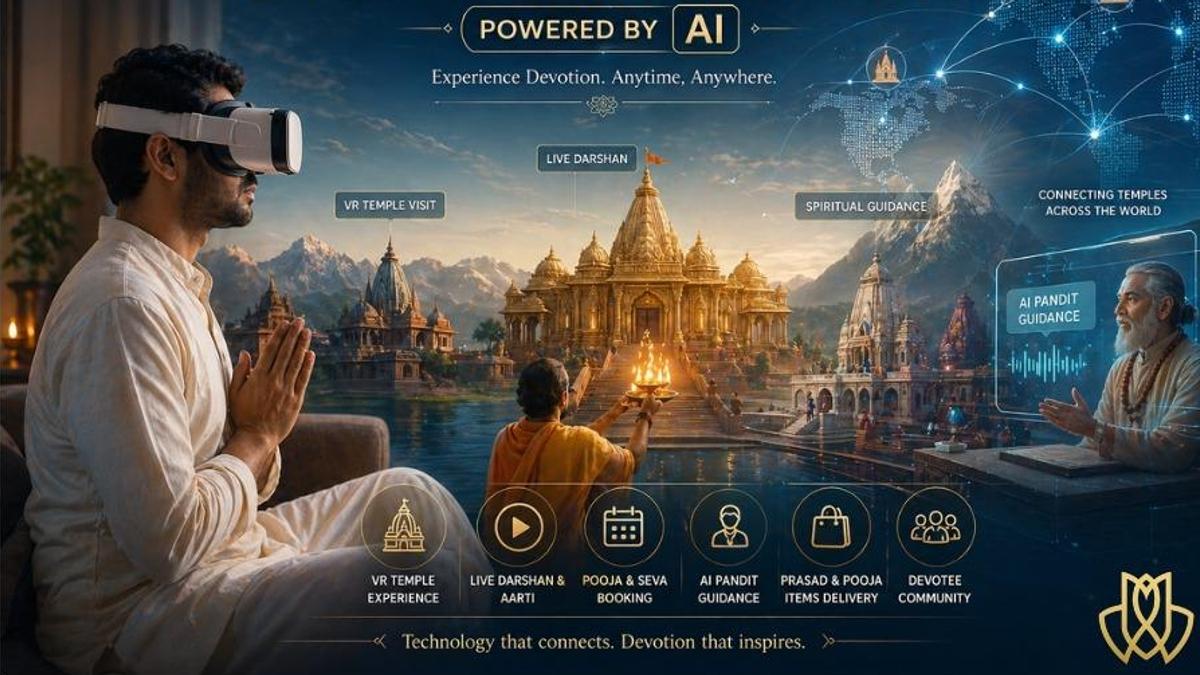
VR Darshan and VR Temple Visits
Discover how VR Darshan is transforming temple visits, spiritual activations and cultural heritage experiences through immersive VR, 360° tours and virtual temple visits.
VR Darshan: How Virtual Reality Is Bringing India’s Temples and Spiritual Heritage Closer to Everyone
India's temples and pilgrimage destinations are not simply places of worship. They are living expressions of architecture, history, tradition, art and cultural identity. From the Jyotirlingas of Lord Shiva to ancient temple towns and pilgrimage centres, these destinations attract millions of visitors every year.
Yet physical travel is not always possible for everyone. Distance, age, mobility limitations, professional commitments, travel costs and large festival crowds can make a pilgrimage difficult to undertake.
This is where VR Darshan is emerging as an interesting application of immersive technology.
Using Virtual Reality, 360° video, spatial audio and interactive digital environments, people can explore representations of temples and pilgrimage destinations from almost anywhere. India's government has also explored digital access to religious destinations: the Ministry of Culture launched Temple 360 in 2022 as a platform through which users could virtually visit or experience darshan of the 12 Jyotirlingas and Char Dham from different locations.
The technology does not attempt to replace physical pilgrimage. Instead, VR can complement traditional visits by making temple architecture, history, rituals and cultural heritage more accessible through digital experiences.
What Is VR Darshan?
VR Darshan, or Virtual Reality Darshan, is an immersive digital experience that allows users to explore a temple, shrine or pilgrimage destination using VR technology.
Depending on how the experience is produced, users may be able to look around a 360° environment, move between locations, explore architectural details, listen to narration, understand rituals and learn about the history of a sacred destination.
A smartphone or computer can provide a panoramic virtual tour, while a VR headset can create a stronger sense of presence by surrounding the viewer with the digital environment.
This distinction is important. A VR Temple Visit is a technological representation of a sacred location. It should not automatically be described as equivalent to physically being present at the temple or participating in an actual religious ritual.
The strongest VR experiences therefore combine technology with accurate storytelling, cultural context and respectful presentation.
Why Is VR Darshan Becoming Relevant in India?
India has a vast network of temples and pilgrimage destinations spread across different states. Visiting several major sites can require considerable time and planning.
For someone living in another city or country, a virtual experience can provide an opportunity to discover a destination before travelling. For elderly people or individuals with mobility challenges, it can provide another way to explore the architectural and cultural aspects of a temple.
There is already growing interest in immersive spiritual experiences. Current digital platforms offer virtual temple experiences, while VR applications have been developed around destinations including Mahakaleshwar, Omkareshwar and Trimbakeshwar.
This demonstrates that VR is moving beyond entertainment and gaming into areas such as spirituality, cultural education and heritage interpretation.
VR Darshan Is More Than a Virtual Tour
A conventional virtual tour primarily answers the question: "What does this place look like?"
A well-designed VR Darshan experience can go further.
It can combine the location with storytelling, history, architecture, audio and cultural interpretation. A user might enter a digital representation of a temple, explore its surroundings, learn about its origins and understand the significance of important architectural elements.
This makes VR particularly useful for cultural storytelling.
The Government of India has also highlighted the use of VR, AR and other immersive technologies for cultural heritage preservation and visitor experiences.
Research into Indian heritage has similarly examined VR and AR as tools for documenting and interpreting historic temples and their architectural narratives.
VR Jyotirling Darshan: Exploring India's Sacred Shiva Temples
One of the most compelling applications of VR for Temples is VR Jyotirling Darshan.
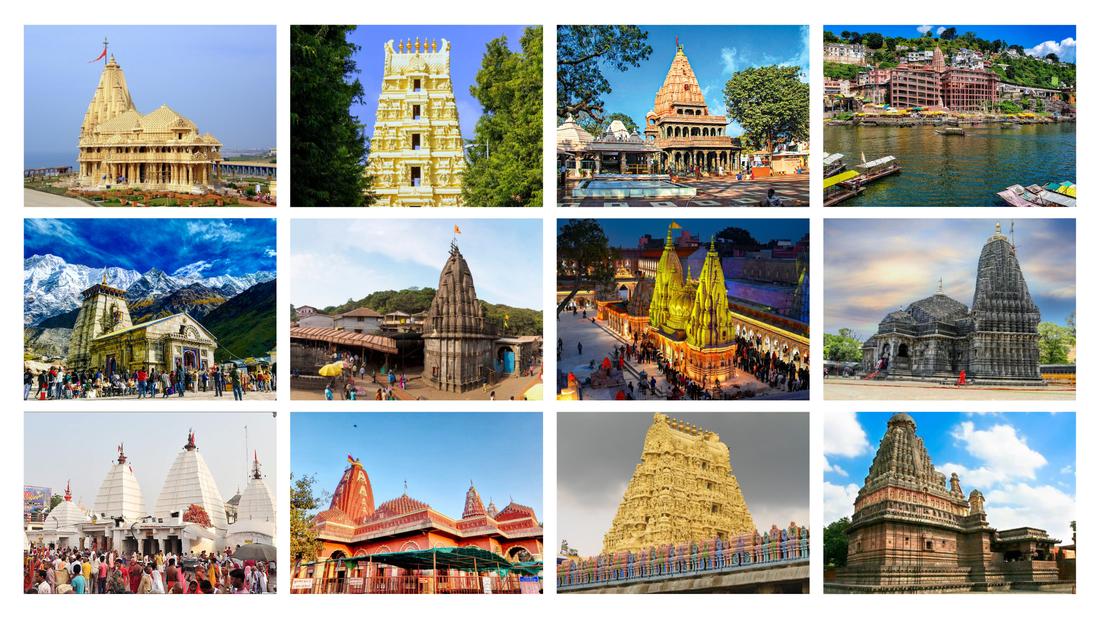
According to Hindu tradition, the 12 Jyotirlingas are sacred Shiva shrines associated with the manifestation of Lord Shiva as a divine column of light. Their geographical spread across India makes visiting all of them a significant pilgrimage journey.
The traditionally recognised destinations include Somnath in Gujarat, Mallikarjuna in Andhra Pradesh, Mahakaleshwar and Omkareshwar in Madhya Pradesh, Kedarnath in Uttarakhand, Bhimashankar and Trimbakeshwar in Maharashtra, Kashi Vishwanath in Uttar Pradesh, Vaidyanath in Jharkhand, Nageshwar in Gujarat, Ramanathaswamy in Tamil Nadu and Grishneshwar in Maharashtra.
There are traditional variations concerning the identification of some locations, so digital content should present such details carefully and with appropriate cultural and historical context.
A VR experience can bring information about these geographically distant destinations together into one educational journey. Users could virtually move from one location to another while learning about each temple's history, architecture, geography and cultural significance.
VR Mahakaleshwar Darshan and the Ujjain Experience
Ujjain provides an especially strong example of how spirituality, heritage and immersive technology can intersect.
Mahakaleshwar Temple is traditionally recognised as one of the 12 Jyotirlingas, and Ujjain has long-standing religious and cultural importance.
A VR Mahakaleshwar Darshan experience can potentially introduce users to the temple environment, architectural features, surrounding pilgrimage landscape and cultural history through 360° imagery or digitally reconstructed environments.
Some existing VR experiences already promote immersive exploration of Mahakaleshwar and Ujjain, including 360° temple environments and representations of the city's spiritual landscape.
The value of such an experience is not simply the ability to "see the temple." It is the opportunity to provide context around the destination and make that information accessible to people who may not immediately be able to travel to Ujjain.
Who Can Benefit From VR Temple Visits?
VR Temple Visits can serve several different audiences.
For elderly devotees, immersive digital experiences can provide an accessible way to explore distant pilgrimage destinations without undertaking a physically demanding journey.
For NRIs and international audiences, VR can provide an introduction to India's spiritual and architectural heritage from thousands of kilometres away.
Students can use immersive experiences to learn about temple architecture, history, geography and cultural traditions in a more visual format than conventional textbooks.
Families can also use VR experiences to introduce younger generations to important Indian temples and pilgrimage destinations.
For travellers, a virtual experience can work as a pre-visit discovery tool. Exploring a destination digitally can help people understand what they want to see before planning an actual journey.
VR and Pilgrimage Tourism
An important point is that VR does not necessarily compete with physical tourism.
It can actually support it.
The journey can look something like this:
Discover digitally → Explore virtually → Learn about the destination → Plan a physical visit → Experience the destination in person.
A person may first encounter a temple through an immersive experience, become interested in its history and architecture, and eventually decide to travel there.
Virtual Tourism India makes a similar distinction, positioning immersive experiences as a way to preview and understand destinations rather than as a replacement for real travel.
This makes VR useful for destination marketing, pilgrimage tourism and cultural discovery.
VR for Temples and Cultural Heritage Preservation
The application of VR goes beyond providing devotees with a virtual experience.
Temples contain architectural details, sculptures, inscriptions, artistic traditions and cultural narratives that can be digitally documented.
High-resolution photography, 3D scanning, photogrammetry and virtual modelling can create detailed digital records of heritage structures.
For example, heritage research has explored the creation of detailed digital models of Indian temples using techniques including terrestrial scanning, UAV data, high-resolution photography and VR environments.
More recent research has also examined digital preservation of temple architecture through immersive technologies and virtual environments.
These applications demonstrate that VR can become part of a broader digital heritage strategy rather than simply functioning as an entertainment attraction.
How VR Activations Can Bring Spiritual Experiences to Events
VR Activations can also take spiritual and cultural storytelling outside the temple environment.
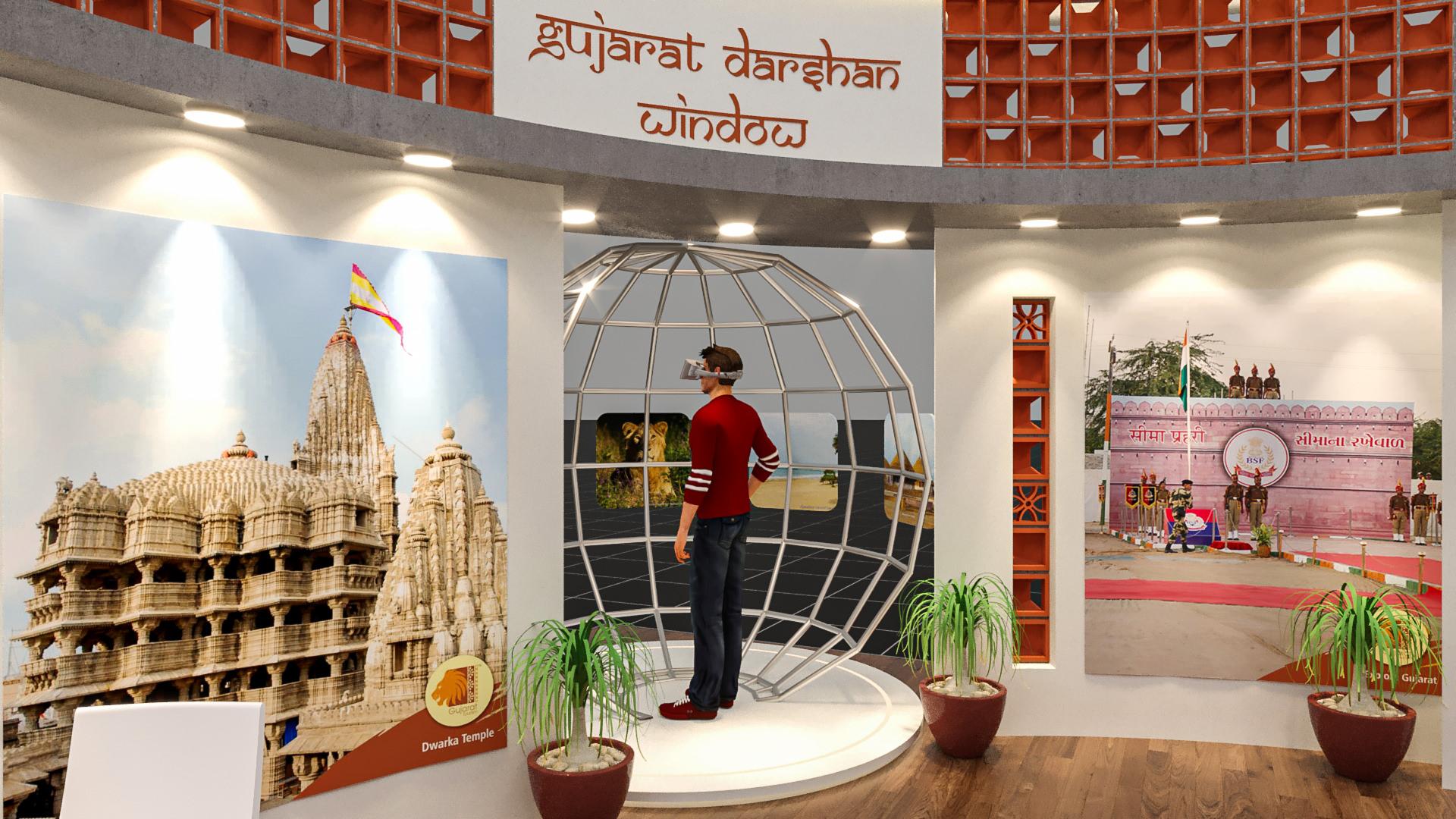
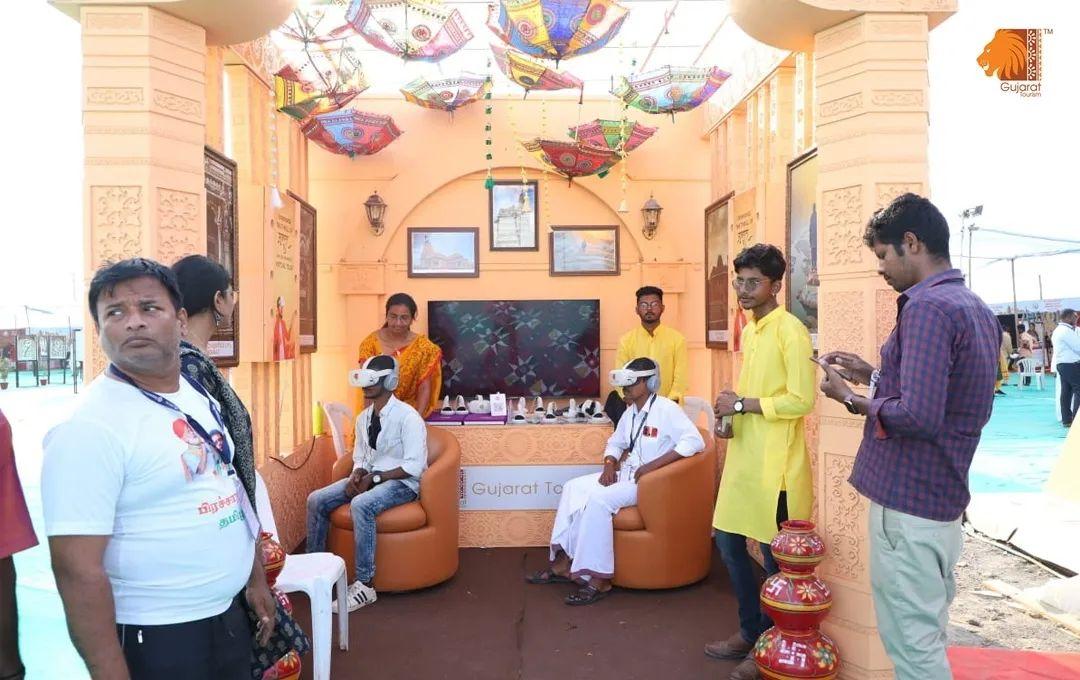
For exhibitions, tourism events, cultural festivals, educational programmes and government showcases, organisers can create immersive stations where visitors explore temples and pilgrimage destinations using VR headsets.
A Spiritual Activation could feature a virtual journey through multiple temples, an interactive Jyotirlinga map, a 360° pilgrimage route or a historical reconstruction.
This approach can make complex cultural stories more engaging, particularly for younger audiences.
For example, an installation could allow visitors to select a Jyotirlinga on an interactive map and then enter its virtual environment. Information about the location, architecture and history could appear during the experience.
The objective should remain education, cultural connection and respectful storytelling rather than treating sacred traditions purely as entertainment.
VR Darshan vs Physical Darshan
VR and physical visits serve different purposes.
| Physical Darshan | VR Darshan |
|---|---|
| Requires physical travel | Can be experienced remotely |
| Takes place in the actual temple | Uses a digital representation |
| Provides physical presence | Creates virtual presence |
| Includes the real-world environment | Primarily uses visual and audio immersion |
| May involve queues and crowds | Can provide convenient digital access |
| Part of a physical pilgrimage | Supports exploration, education and discovery |
The most appropriate way to position VR is as a complement to traditional pilgrimage.
It can help people discover, understand and revisit sacred destinations, while the physical temple visit remains a fundamentally different experience.
What Makes a Good VR Darshan Experience?
Creating an effective VR experience requires more than putting a 360° camera inside a temple.
The experience should begin with high-quality visual capture or accurate 3D modelling. Spatial audio can enhance immersion, while narration can explain architectural and cultural details.
Navigation should remain simple, particularly if the experience is designed for first-time VR users or elderly audiences.
Cultural accuracy is equally important. Temple permissions, appropriate filming practices, religious sensitivities and accurate representation of rituals should be considered during production.
A good experience should also work across different devices where possible, allowing users to access it through a VR headset, smartphone or web interface.
The Future of VR Darshan in India
The potential of VR in this field extends well beyond individual temple tours.
Future experiences could combine VR with AI-based guides, multilingual narration, interactive maps, spatial audio, 3D reconstruction and augmented reality. Visitors could potentially explore historical versions of heritage sites or understand how temple architecture evolved over centuries.
India's ongoing investment in digital heritage provides a strong foundation for this direction. The country's cultural institutions are already using technologies such as VR, AR, digital kiosks and immersive visualisation to improve heritage interpretation.
The future may therefore involve a connected ecosystem in which digital experiences support education, heritage preservation, tourism, cultural communication and accessibility.
Conclusion
VR Darshan represents an interesting meeting point between technology, spirituality and India's cultural heritage.
From VR Temple Visits and Mahakaleshwar experiences to VR Jyotirling Darshan and immersive heritage exhibitions, Virtual Reality can make sacred destinations easier to explore and understand from almost anywhere.
Its greatest potential may not lie in replacing physical pilgrimage, but in complementing it.
A thoughtfully produced VR experience can allow someone to discover a temple, learn its history, understand its architecture, explore its cultural significance and potentially become inspired to visit in person.
As VR technology becomes more accessible, VR for Temples can become an important tool for cultural storytelling, digital preservation and spiritual accessibility—provided these experiences are created with accuracy, respect and sensitivity.
Author Bio
Khushboo is a hospitality professional with over 12 years of experience and a degree in Hospitality. As the Corporate Sales Lead at FabX Events, She works closely with businesses, event organisers, and enterprises to provide the right technology rental solutions for conferences, exhibitions, training programmes, corporate events, and business projects. Passionate about technology and event innovation, Khushboo stays up to date with the latest hardware trends and shares practical insights, industry best practices, and expert advice through the FabX Events blog.