 Corporate Events Blogs
Corporate VR Experiences vs Traditional Team Building Activities
Compare Corporate VR Experiences and Traditional Team Building Activities for MICE events. Discover how VR activations improve engagement, collaboration, and employee participation for modern corporate teams.
Corporate VR Experiences vs Traditional Team Building Activities: Which Delivers Better Results?
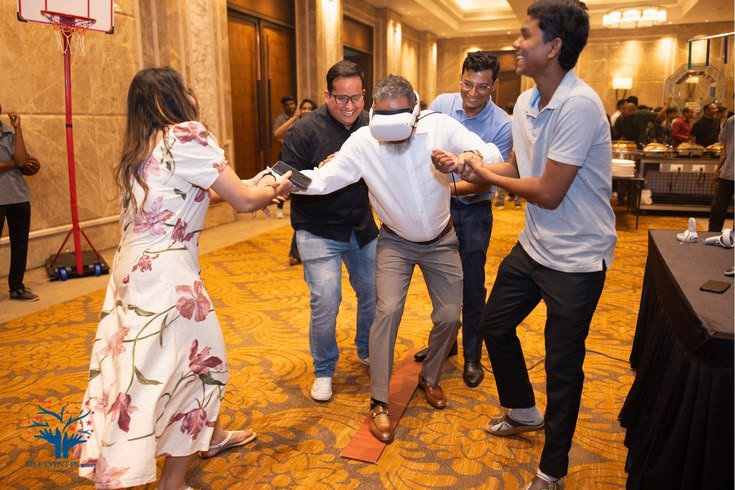
Corporate team-building activities have evolved significantly over the past decade. Organizations are no longer looking for activities that simply fill a schedule during annual offsites or employee engagement programs. Today's businesses want measurable outcomes such as stronger collaboration, improved communication, better leadership skills, and increased employee engagement.
Traditionally, companies relied on outdoor adventures, leadership workshops, escape rooms, team lunches, and off-site retreats. While these activities remain popular, the rise of immersive technology has introduced a new contender: Corporate VR Experiences.
As organizations across India invest more in digital transformation and employee engagement, many HR leaders, event planners, and MICE professionals are asking a crucial question:
Do VR activations for MICE events deliver better results than traditional team-building activities?
In this guide, we'll compare both approaches, examine their strengths, and help organizations determine the best strategy for their workforce.
Why Team Building Matters More Than Ever
Modern workplaces face unique challenges:
- Hybrid work environments
- Distributed teams across multiple cities
- Reduced face-to-face interactions
- Employee engagement concerns
- Cross-functional collaboration gaps
Effective team-building programs help organizations:
- Improve communication
- Strengthen workplace relationships
- Encourage innovation
- Build trust among teams
- Develop leadership skills
- Improve employee morale
The challenge is choosing experiences that actually create these outcomes.
Understanding Traditional Team Building Activities
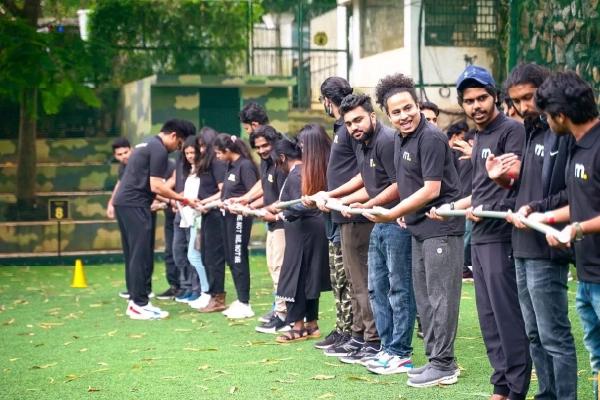
Traditional team-building programs have been used for decades and continue to be a popular choice for corporate events.
Common Traditional Activities
Corporate Retreats
Multi-day offsite experiences focused on collaboration, strategy, and networking.
Outdoor Adventure Programs
Activities such as:
- Rope courses
- Obstacle challenges
- Trekking
- Camping
Escape Rooms
Teams solve puzzles under time pressure to encourage communication and problem-solving.
Leadership Workshops
Structured sessions designed to improve management and interpersonal skills.
Team Lunches and Social Events
Informal gatherings that promote relationship building.
What Are Corporate VR Experiences?
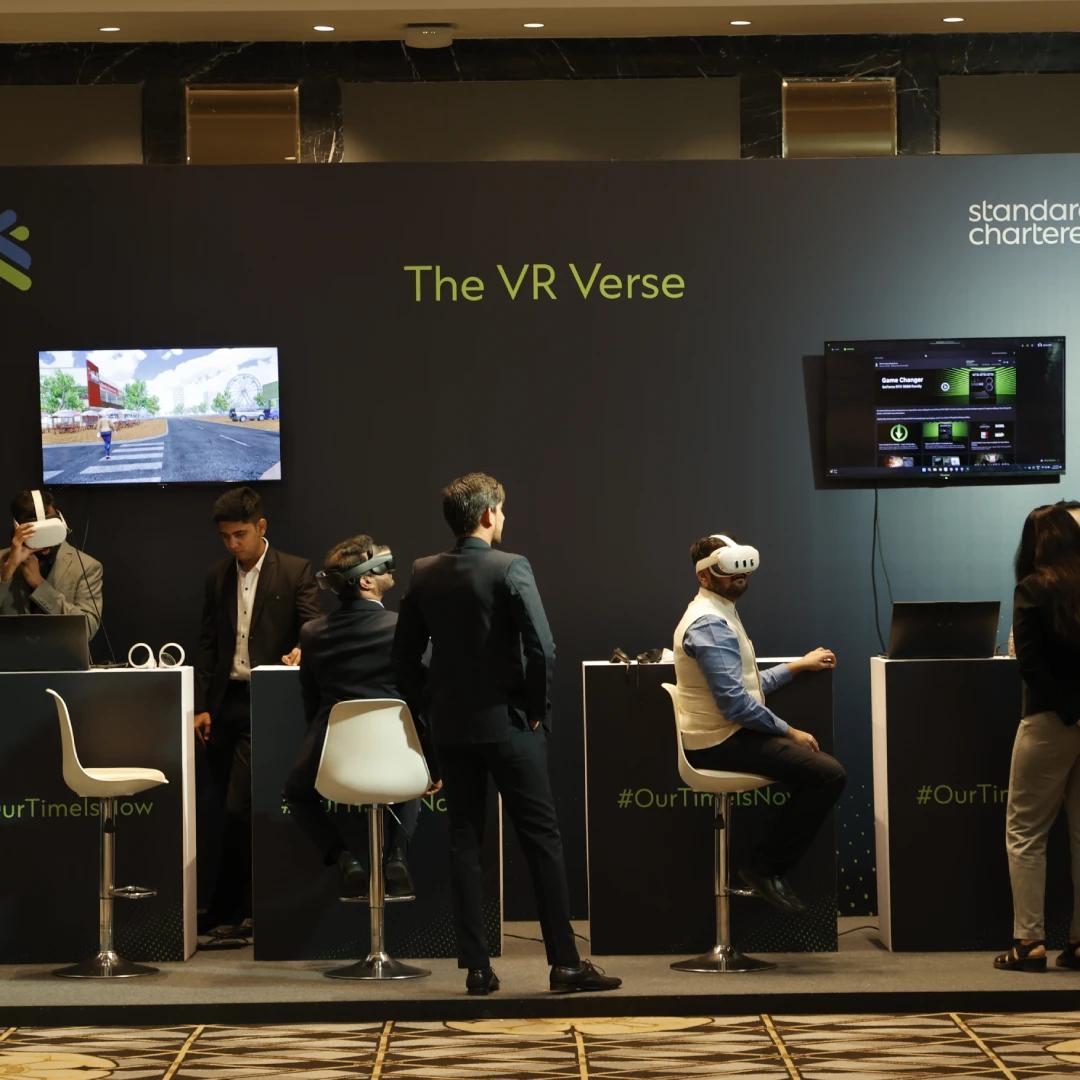
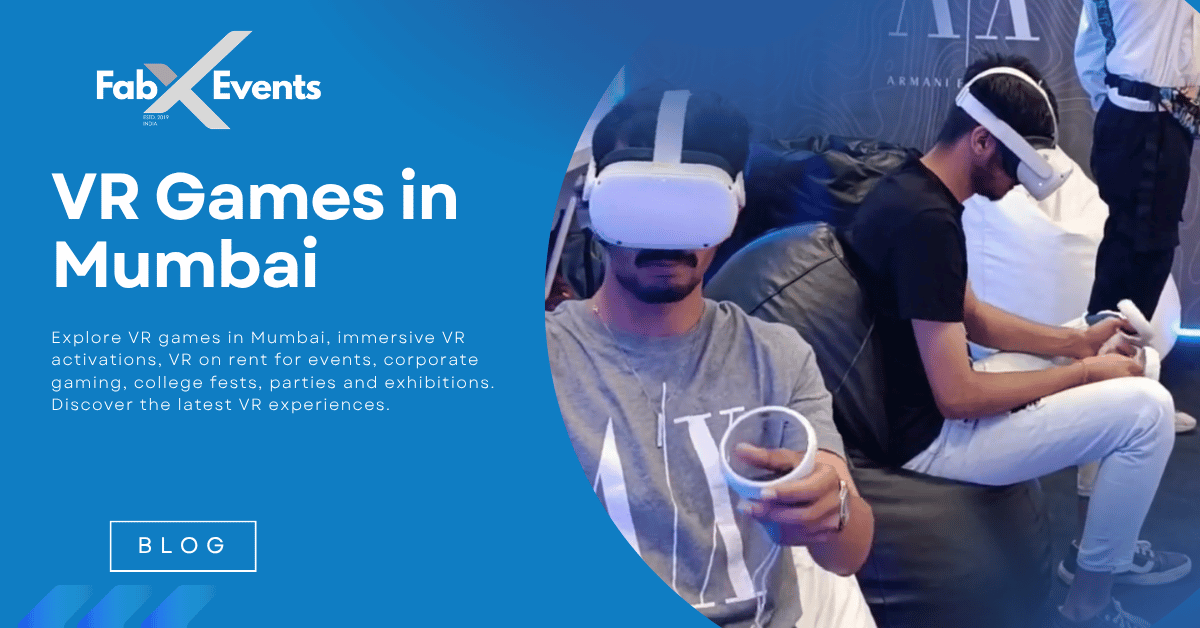
Corporate VR Experiences use virtual reality technology to place participants inside immersive digital environments where they interact, collaborate, compete, and solve challenges together.
Unlike passive activities, VR requires active participation.
Employees can:
- Work together to complete missions
- Solve virtual escape rooms
- Participate in team challenges
- Practice leadership skills
- Experience realistic simulations
At Fabx Events, our VR Activations for MICE are designed specifically to create highly engaging and memorable experiences that align with corporate objectives.
Why VR Activations Are Becoming Popular in MICE Events
The MICE industry is rapidly embracing immersive technology because it addresses one major challenge:
Attention
Traditional activities often struggle to maintain engagement throughout an event.
VR creates complete immersion.
Participants become active contributors rather than passive attendees.
Benefits include:
- Higher participation rates
- Longer engagement duration
- Greater excitement
- Stronger memory retention
- Enhanced collaboration
This is why many organizations now include VR Activities on Rent during:
- Corporate offsites
- Annual meetings
- Leadership summits
- Incentive programs
- Employee engagement events
Corporate VR Experiences vs Traditional Team Building
1. Employee Engagement
Traditional Activities
While traditional games can be enjoyable, participation often varies.
Some employees:
- Prefer observing
- Feel uncomfortable speaking publicly
- Avoid physically demanding activities
VR Experiences
VR naturally encourages involvement.
Employees become part of the experience rather than spectators.
Popular VR activities include:
- VR Escape Rooms
- VR Cricket Challenges
- Multiplayer VR Games
- Team Mission Simulations
- VR Adventure Experiences
2. Collaboration and Communication
Traditional Team Building
Activities encourage communication through:
- Group discussions
- Physical challenges
- Workshops
These remain effective for interpersonal development.
VR Team Challenges
VR introduces entirely new collaboration opportunities.
Participants must:
- Share information
- Coordinate actions
- Solve challenges together
- Adapt to changing scenarios
Examples include:
VR Escape Missions
Teams communicate constantly to solve puzzles and escape virtual environments.
Multiplayer VR Sports
Colleagues compete and collaborate simultaneously.
Mission-Based Simulations
Employees work together toward a common objective.
3. Suitability for Hybrid and Remote Teams
Traditional Activities
Traditional team-building usually requires physical presence.
This can be difficult when teams are spread across multiple cities.
VR Activations for MICE
VR can connect participants from different locations into a shared environment.
Benefits include:
- Equal participation
- Reduced travel costs
- Consistent experiences
- Improved accessibility
As hybrid work models continue to grow, VR offers a scalable solution.
4. Realistic Skill Development
Many corporate objectives require practical skill-building.
Traditional Training Exercises
Can be useful but often rely on hypothetical discussions.
VR Simulations
Employees can practice real-world situations such as:
- Leadership decision making
- Customer interactions
- Crisis management
- Communication under pressure
- Problem-solving scenarios
Because participants experience situations rather than discuss them, learning outcomes can be stronger.
5. Human Connection and Relationship Building
This is where traditional activities still have a significant advantage.
Traditional Team Building Strengths
Face-to-face interactions encourage:
- Informal conversations
- Emotional connection
- Personal networking
- Relationship development
Many workplace friendships are formed during:
- Coffee breaks
- Team dinners
- Group travel experiences
VR Limitations
Although highly engaging, VR environments cannot fully replicate spontaneous human interactions.
6. Scalability
Traditional Programs
Scaling physical activities often requires:
- Additional facilitators
- Larger venues
- Increased logistics
VR Activities on Rent
VR experiences can be replicated easily across multiple teams and locations.
Benefits include:
- Consistent delivery
- Standardized outcomes
- Easier performance measurement
Popular VR Activities for Corporate Events
At Fabx Events, some of the most successful VR activations for MICE programs include:
VR Cricket
Perfect for:
- Annual Day celebrations
- Employee engagement events
- Dealer meets
Creates friendly competition and excitement.
VR Racing Simulator
Employees compete for fastest lap times.
Excellent for:
- Incentive events
- Product launches
- Leadership conferences
Multiplayer VR Games
Encourages:
- Teamwork
- Strategy
- Collaboration
Ideal for corporate offsites.
VR Roller Coaster Experience
Provides a thrilling immersive experience suitable for:
- Family days
- Employee carnivals
- Corporate fun zones
VR Escape Room
One of the most effective corporate team-building activities.
Teams must collaborate to:
- Solve puzzles
- Communicate effectively
- Complete missions
Measuring Team-Building Success
Regardless of the format chosen, companies should evaluate outcomes using measurable KPIs.
Suggested Metrics
Employee Participation Rate
How many attendees actively participated?
Engagement Duration
How long did participants interact?
Collaboration Scores
Did employees work effectively together?
Employee Feedback
Would participants recommend the activity?
Event Satisfaction Ratings
How memorable was the experience?
VR experiences often perform exceptionally well in engagement-related metrics.
Why Many Companies Are Choosing a Hybrid Approach
Rather than replacing traditional team building entirely, many organizations are combining both approaches.
Example Corporate Engagement Strategy
Quarterly VR Sessions
- VR Games
- Team Challenges
- Leadership Simulations
- Innovation Exercises
Annual Physical Retreats
- Networking
- Strategy Meetings
- Outdoor Activities
- Relationship Building
This approach combines the strengths of both formats.
Benefits include:
- Better employee engagement
- Stronger collaboration
- Enhanced company culture
- Improved training outcomes
Why Fabx Events Is a Preferred Partner for Corporate VR Activations
Organizations across India trust Fabx Events because we provide:
Large VR Experience Portfolio
Including:
- VR Cricket
- VR Racing
- VR Roller Coasters
- VR Escape Rooms
- Multiplayer VR Challenges
- Adventure Simulations
Nationwide Event Execution
Supporting:
- MICE Events
- Corporate Offsites
- Annual Meetings
- Leadership Summits
- Employee Engagement Programs
End-to-End Management
Our team handles:
- Setup
- Technical support
- Event operations
- On-site assistance
Customizable Experiences
We align every activation with your:
- Event goals
- Audience profile
- Brand messaging
The Future of Corporate Team Building
As organizations continue embracing hybrid work models, immersive technology will become increasingly important.
Future trends include:
AI-Powered VR Training
Personalized learning journeys.
Mixed Reality Collaboration
Combining physical and virtual environments.
Virtual Leadership Simulations
Realistic executive decision-making experiences.
Multiplayer Global Team Challenges
Connecting teams worldwide.
Companies that adopt immersive experiences early will gain a significant advantage in employee engagement and organizational development.
Conclusion
When comparing Corporate VR Experiences with traditional team-building activities, there is no universal winner.
Traditional activities remain highly effective for relationship building, networking, and strengthening workplace culture.
However, VR Activations for MICE events offer clear advantages when it comes to:
- Employee engagement
- Scalability
- Skill development
- Remote team inclusion
- Measurable outcomes
For modern organizations, the most successful approach is often a combination of both.
By blending immersive VR Activities on Rent with traditional team-building experiences, companies can create programs that are engaging, impactful, and aligned with today's evolving workforce.
If you're planning a corporate offsite, annual meeting, incentive program, or employee engagement event, Fabx Events can help you create unforgettable VR experiences that deliver measurable business results.
Author Bio
Khushboo is a hospitality professional with over 12 years of experience and a degree in Hospitality. As the Corporate Sales Lead at FabX Events, She works closely with businesses, event organisers, and enterprises to provide the right technology rental solutions for conferences, exhibitions, training programmes, corporate events, and business projects. Passionate about technology and event innovation, Khushboo stays up to date with the latest hardware trends and shares practical insights, industry best practices, and expert advice through the FabX Events blog.
FAQs