 VR & AR Blogs
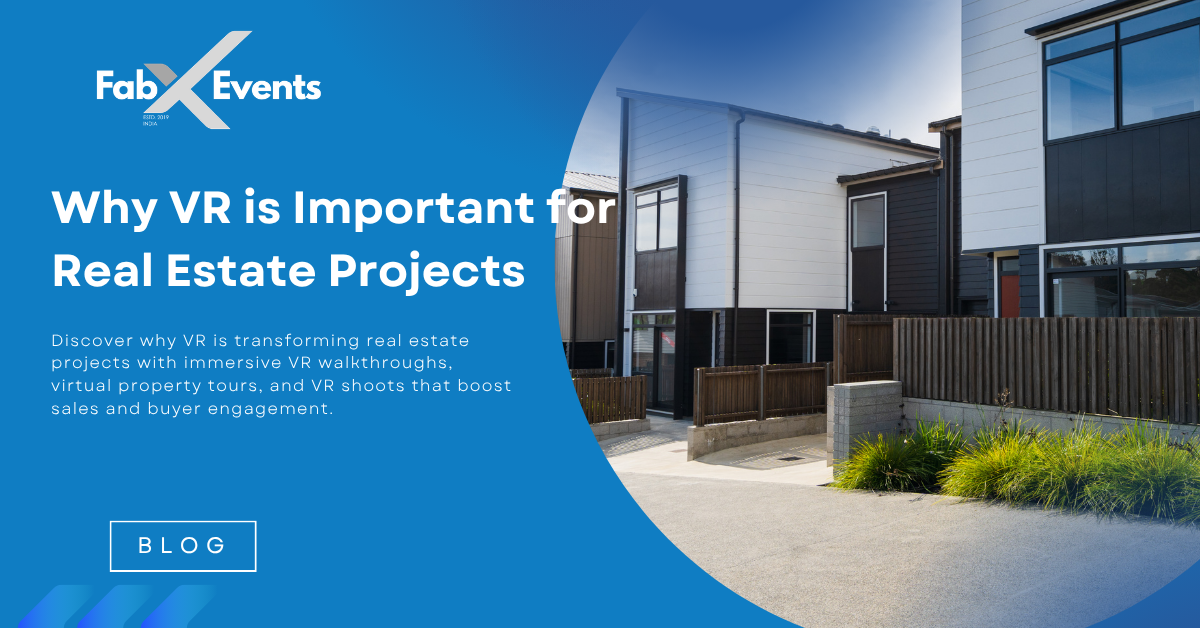
Why VR is Important for Real Estate Projects
Discover why VR is transforming real estate projects with immersive VR walkthroughs, virtual property tours, and VR shoots that boost sales and buyer engagement.
Why VR is Important for Real Estate Projects: The Complete Guide to VR Walkthroughs & Virtual Property Experiences
Introduction
The real estate industry has always relied on visual storytelling to market properties. High-quality photographs, brochures, scale models, and video tours have long been the standard tools for showcasing residential and commercial projects. However, today's buyers expect far more than static visuals—they want to experience a property before making one of the biggest financial decisions of their lives.
Instead of simply viewing images or videos, buyers can now walk through an apartment, villa, office, or commercial space in an immersive 3D environment. They can explore every room, understand layouts, inspect finishes, and experience the flow of a property from anywhere in the world.
For developers, builders, architects, and real estate consultants, VR is no longer just an innovative marketing tool—it has become a strategic business solution that accelerates sales, improves customer confidence, reduces marketing costs, and expands global reach.
Whether you're selling luxury apartments, commercial office spaces, plotted developments, or under-construction townships, immersive activations are redefining how properties are marketed and sold.
In this guide, we'll explore why VR is becoming essential for modern real estate projects, its business benefits, practical applications, and why every real estate company should consider integrating VR into its sales and marketing strategy.
The Evolution of Property Buying
Buying or leasing property is a high-involvement decision. Traditionally, buyers rely on:
- Property photographs
- Printed brochures
- Floor plans
- Video walkthroughs
- Site visits
- Model apartments
While these methods provide useful information, they often fail to answer critical questions:
- How spacious does the living room actually feel?
- Does the layout flow naturally?
- How much sunlight enters the bedroom?
- What is the view from the balcony?
- How do the amenities connect to the residential towers?
These uncertainties can delay decision-making and increase the number of site visits required before a purchase.
Virtual Tours solves these challenges by allowing buyers to experience the property virtually, creating a stronger emotional connection and enabling faster, more informed decisions.
What is VR for Real Estate?
People use immersive Virtual Reality technology to create realistic, interactive digital versions of residential, commercial, and mixed-use developments.
Using a VR headset or compatible device, users can explore a property as though they are physically present.
Unlike traditional videos, VR allows visitors to:
- Walk through rooms
- Look in every direction
- Explore interiors naturally
- Experience realistic scale and depth
- Interact with design elements
This immersive experience significantly improves buyer confidence compared to static marketing materials.
Why VR is Important for Real Estate Projects
1. Immersive VR Walkthroughs Create Better Buyer Experiences
One of the most valuable applications of VR is the virtual walkthrough.
Instead of scrolling through images, buyers can move room by room, examine layouts, and experience the property in full 3D.
Benefits
- Better understanding of room dimensions
- Realistic visualization
- Increased emotional connection
- Improved buyer confidence
- Reduced uncertainty before purchase
A well-designed VR walkthrough helps buyers imagine themselves living or working in the property, making it easier to move from interest to purchase.
2. Sell Under-Construction Projects with Confidence
One of the biggest challenges for developers is selling properties before construction is complete.
A 360 VR Shoot combined with photorealistic architectural visualization allows buyers to explore projects months—or even years—before handover.
Developers can showcase:
- Apartments
- Villas
- Clubhouses
- Landscaped gardens
- Rooftop amenities
- Swimming pools
- Fitness centers
- Children's play areas
- Retail spaces
Instead of relying solely on floor plans and artist impressions, buyers experience the completed vision of the project.
This significantly improves trust and purchase confidence.
3. Reduce Multiple Physical Site Visits
Property visits require considerable time and resources for both buyers and sales teams.
Many prospects visit multiple projects before narrowing down their options.
With immersive walkthroughs, buyers can shortlist properties remotely, ensuring only serious prospects schedule physical visits.
Benefits include:
- Reduced travel
- Better-qualified leads
- Increased sales efficiency
- Lower operational costs
4. Expand Reach to NRI and International Buyers
Many real estate companies target Non-Resident Indians (NRIs), overseas investors, and international buyers.
However, arranging property visits across borders is often impractical.
VR Companies now enables remote property exploration from anywhere in the world.
Potential buyers can:
- Tour apartments
- Compare layouts
- Explore amenities
- Understand project surroundings
This digital-first approach removes geographical barriers and expands the potential customer base.
5. Personalize Interiors Before Purchase
One of VR's most engaging capabilities is real-time interior customization.
Buyers can experiment with:
Walls
- Paint colors
- Wallpapers
- Decorative finishes
Flooring
- Marble
- Wooden flooring
- Tiles
- Vinyl
Furniture
- Sofa layouts
- Dining arrangements
- Bedroom designs
Kitchens
- Cabinet finishes
- Countertops
- Lighting
This interactive experience helps buyers personalize their future home and often increases opportunities for premium upgrades.
How VR Benefits Commercial Real Estate
VR is equally valuable for commercial projects.
Office spaces, retail outlets, business parks, warehouses, and industrial facilities can all be showcased through immersive virtual tours.
Potential tenants can:
- Walk through office layouts
- Evaluate floor space
- Understand accessibility
- Plan furniture arrangements
- Compare leasing options
This accelerates commercial leasing while reducing unnecessary property visits.
Architectural Visualization Before Construction
Developers and architects increasingly use VR during the planning stage.
Instead of reviewing 2D drawings, stakeholders can experience projects in three dimensions before construction begins.
VR enables architects to:
- Validate designs
- Identify layout issues
- Improve customer flow
- Optimize usability
- Reduce design revisions
Detecting problems early saves significant construction costs later.
Virtual Sales Galleries: The Future of Property Marketing
Constructing physical sample flats and model homes requires substantial investment.
Instead, many developers now establish sales galleries where visitors wear VR headsets to experience:
- Entire townships
- Model apartments
- Commercial towers
- Future infrastructure
- Green spaces
- Community amenities
Compared to traditional model homes, VR galleries are more cost-effective, scalable, and easier to update as projects evolve.
VR Activations at Real Estate Events
Real estate exhibitions, investor meets, and property expos are highly competitive environments where developers must capture attention quickly.
This is where activations create a significant advantage.
Visitors are naturally drawn to immersive experiences that allow them to explore projects interactively.
Benefits include:
- Higher booth footfall
- Longer visitor engagement
- Better lead generation
- Stronger brand recall
- Increased inquiry conversions
For developers launching new projects, VR activations provide a memorable experience that differentiates their brand from competitors.
Business Benefits of VR for Real Estate Companies
Faster Sales Cycles
Immersive experiences help buyers understand properties more quickly, reducing hesitation and accelerating purchase decisions.
Lower Marketing Costs
Developers can reduce expenses on:
- Printed brochures
- Physical mock-ups
- Multiple sample apartments
- Frequent site visits
Better Lead Quality
Prospects who complete VR walkthroughs typically have a clearer understanding of the property, resulting in more qualified sales conversations.
Higher Conversion Rates
Interactive experiences create stronger emotional connections, increasing the likelihood of conversions.
Global Accessibility
Properties become accessible to buyers regardless of their location.
Industries That Benefit from VR in Real Estate
VR technology supports a wide range of property sectors, including:
Residential Developments
- Apartments
- Villas
- Townships
- Luxury residences
Commercial Projects
- Office buildings
- Business parks
- Co-working spaces
Retail Real Estate
- Shopping malls
- High-street retail
- Mixed-use developments
Hospitality
- Hotels
- Resorts
- Vacation homes
Institutional Projects
- Educational campuses
- Healthcare facilities
- Senior living communities
- Student housing
Emerging Trends in VR for Real Estate
As technology advances, VR is becoming even more intelligent and interactive.
Some of the latest innovations include:
AI-Guided Virtual Tours
AI-powered assistants can answer buyer questions during virtual property walkthroughs, creating a personalized experience.
Multi-User Virtual Property Visits
Families, investors, and agents in different locations can join the same VR session simultaneously to explore a property together.
Digital Twins
Developers are increasingly creating digital replicas of buildings for ongoing maintenance, facility management, and future renovations.
Hybrid VR + AR Experiences
Buyers visiting a project site can use Augmented Reality (AR) alongside VR to compare the current construction stage with the completed vision.
Personalized Virtual Staging
Furniture, décor, lighting, and finishes can be customized based on individual buyer preferences, helping them visualize their future space more effectively.
Why Choose a Professional VR Partner for Real Estate Projects?
Creating a high-quality walkthrough requires more than just 3D rendering. A professional VR partner ensures:
- Photorealistic visualization
- Accurate architectural representation
- Smooth navigation
- Optimized performance across VR devices
- Interactive hotspots and information panels
- Branding integration for developers
- Scalable solutions for sales galleries, exhibitions, and digital marketing campaigns
Whether you're marketing a luxury apartment, commercial office tower, or integrated township, investing in professionally developed VR content enhances your brand image and delivers a superior customer experience.
Conclusion
The real estate industry is rapidly embracing digital transformation, and Virtual Reality is at the forefront of this evolution. What was once considered a futuristic technology has become a practical business tool that enhances every stage of the property lifecycle—from design and visualization to marketing, sales, leasing, and facility management.
By integrating, developers and real estate companies can offer immersive property experiences that help buyers make faster, more confident decisions. VR Walkthroughs eliminate the limitations of traditional marketing materials, bring under-construction projects to life long before completion. Combined with engaging content & activations, these solutions attract more qualified leads, improve conversion rates, reduce operational costs, and extend reach to global audiences.
As buyer expectations continue to shift toward digital-first experiences, adopting VR is no longer just an innovation—it's a competitive advantage. Real estate companies that invest in immersive technologies today will be better positioned to engage customers, accelerate sales, and deliver exceptional property experiences in the years ahead.
Author Bio
Khushboo is a hospitality professional with over 12 years of experience and a degree in Hospitality. As the Corporate Sales Lead at FabX Events, She works closely with businesses, event organisers, and enterprises to provide the right technology rental solutions for conferences, exhibitions, training programmes, corporate events, and business projects. Passionate about technology and event innovation, Khushboo stays up to date with the latest hardware trends and shares practical insights, industry best practices, and expert advice through the FabX Events blog.
FAQs