 Corporate Brand Activations
VR Workshops and VR Labs for Schools in India
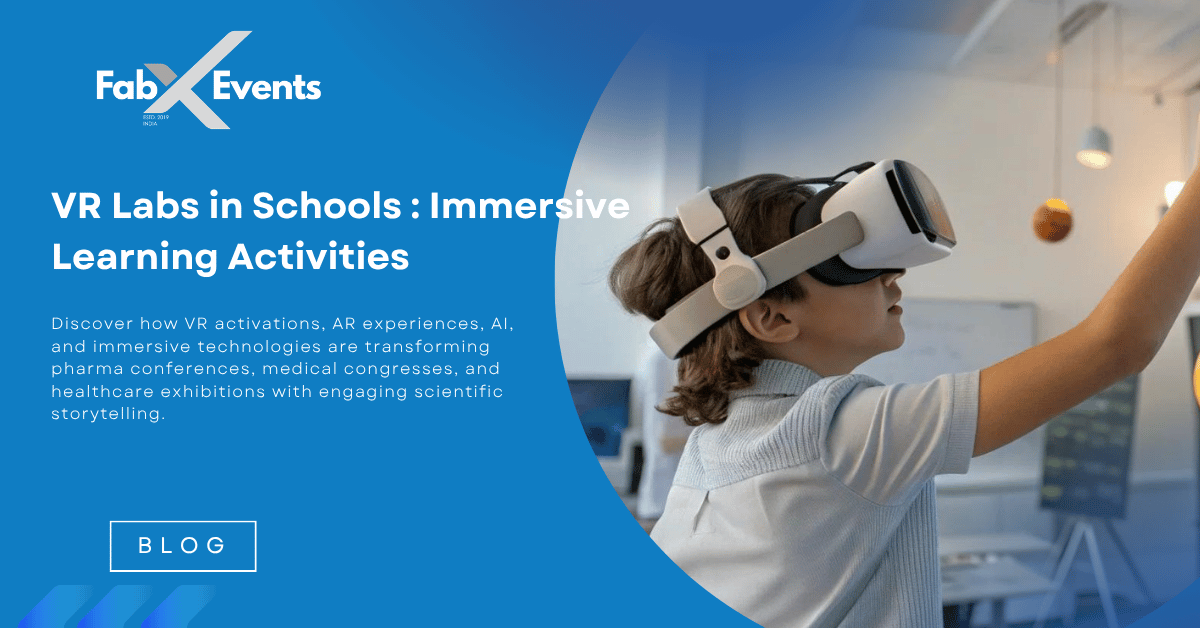
Discover how VR in Schools is transforming education with immersive learning, VR Workshops for School, VR Labs, virtual field trips, and interactive classroom experiences.
VR in Schools: Immersive Learning Activities for Indian Classrooms
Introduction
Education is evolving rapidly, and classrooms today look very different from those of a decade ago. Digital boards, online learning platforms, AI-powered teaching tools, and smart classrooms have already changed how students access information. The next major transformation is being driven by Virtual Reality (VR), a technology that enables students to move beyond textbooks and experience concepts in fully immersive three-dimensional environments.
Instead of simply reading about the solar system, students can walk among planets. Rather than memorizing historical facts, they can explore ancient civilizations. Science experiments that were once limited by laboratory infrastructure can now be performed safely in virtual laboratories.
Across India, schools are embracing technology to create more engaging learning environments. Supported by initiatives such as the National Education Policy (NEP) 2020, immersive learning is becoming an increasingly important part of modern education. As VR hardware becomes more affordable and educational content continues to grow, many institutions are introducing VR Workshops programs, establishing VR Labs for Schools, and integrating VR Classes for Schools into their teaching methodologies.
This article explores how Virtual Reality is transforming Indian classrooms, the benefits it offers students and educators, practical classroom applications, implementation strategies, and why VR is becoming one of the most exciting educational technologies available today.
Understanding Virtual Reality in Education
Virtual Reality is a technology that creates computer-generated three-dimensional environments where students can interact with digital objects and experiences as though they were physically present.
Using standalone VR headsets such as Meta Quest 3 and other educational devices, learners can enter virtual classrooms, laboratories, museums, historical landmarks, industrial facilities, or even outer space without leaving their school.
Unlike passive learning methods, Virtual Reality promotes experiential learning. Instead of only listening to explanations, students actively participate, observe, explore, and interact. This hands-on approach makes complex subjects easier to understand while increasing curiosity and engagement.
Rather than replacing teachers, VR serves as a powerful teaching aid that complements traditional classroom instruction by making abstract concepts easier to visualize.
Why VR is Becoming Important in Indian Schools
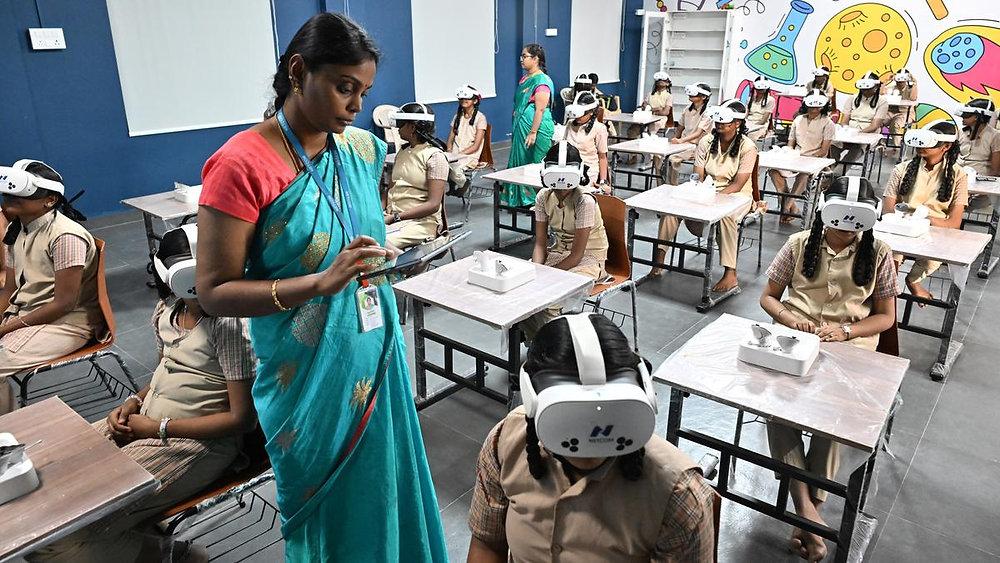
India's education system is undergoing significant transformation as schools adopt digital technologies to improve learning outcomes. The National Education Policy encourages innovative teaching methods that promote creativity, critical thinking, and practical understanding rather than rote memorization.
Virtual Reality aligns closely with these goals because it enables students to experience learning rather than simply consume information.
Schools are increasingly introducing VR in School programs because immersive lessons help maintain student attention for longer periods, improve concept retention, and accommodate different learning styles. Visual learners, kinesthetic learners, and students who benefit from interactive experiences often find VR lessons easier to understand than conventional classroom lectures.
For schools in smaller cities and rural regions, Virtual Reality can also provide access to educational experiences that may otherwise be difficult or expensive to organize.
Bringing Science Laboratories into the Classroom
One of the most practical applications of Virtual Reality is the creation of virtual science laboratories.
Many schools face challenges related to laboratory infrastructure, safety regulations, limited equipment, or high maintenance costs. Virtual laboratories allow students to perform experiments repeatedly without consuming physical materials or exposing themselves to hazardous chemicals.
Students can safely conduct chemistry experiments, study molecular structures, assemble electrical circuits, investigate principles of physics, and explore biological systems in three dimensions.
Because experiments can be repeated multiple times, students gain confidence while developing a stronger conceptual understanding of scientific principles.
Virtual Field Trips Without Leaving School
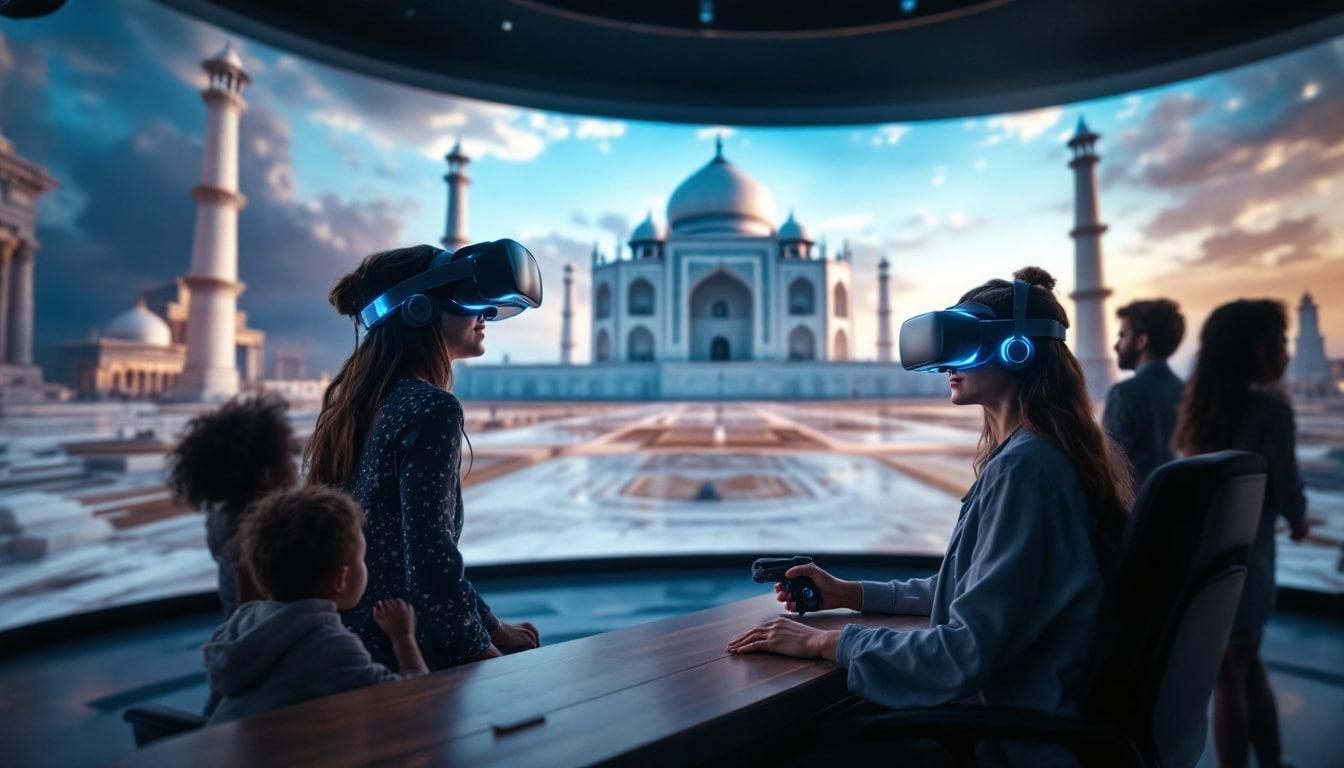
Educational excursions provide valuable learning experiences but often involve significant planning, travel expenses, and logistical challenges.
Virtual Reality removes these barriers by allowing entire classrooms to visit destinations from anywhere in the world.
Students can explore the Taj Mahal, Red Fort, Ajanta and Ellora Caves, Indian Parliament, museums, wildlife sanctuaries, rainforests, coral reefs, or even the International Space Station through immersive guided experiences.
Virtual field trips make geography, history, culture, and environmental studies more engaging while ensuring that every student has equal access to these educational opportunities.
Making History Interactive
History lessons often rely on textbooks and timelines that can make important events feel distant.
Virtual Reality transforms historical education by placing students inside recreated historical environments.
Learners can walk through the Indus Valley Civilization, explore Nalanda University, experience the Mughal era, observe archaeological reconstructions, or visit important landmarks from India's freedom movement.
Experiencing history rather than memorizing dates creates stronger emotional connections and significantly improves long-term retention.
Exploring Space Through Virtual Reality
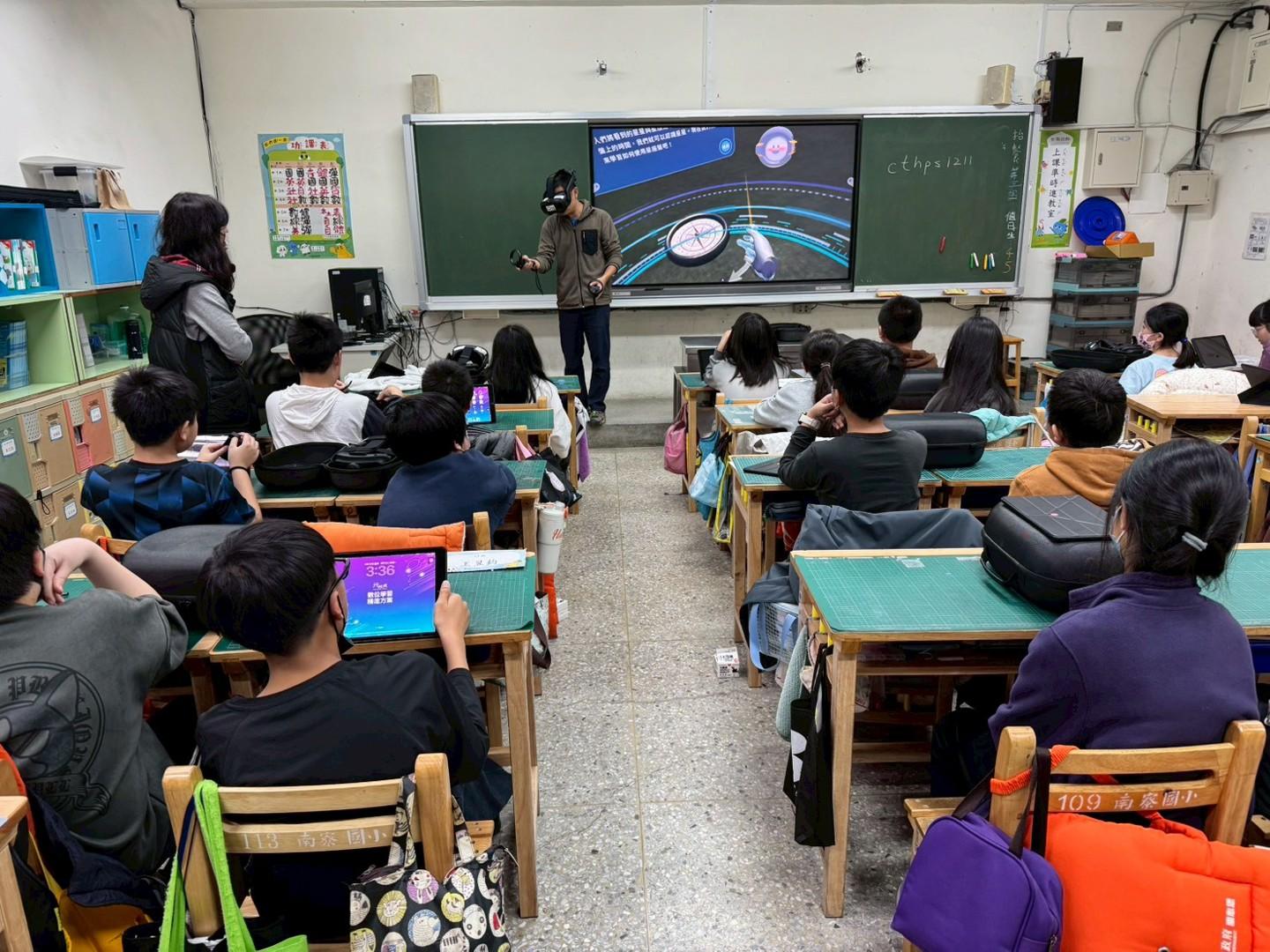
Astronomy becomes far more exciting when students can travel beyond Earth.
VR Classes allow learners to walk on the Moon, explore Mars, observe planetary motion, visit the International Space Station, understand eclipses, and study galaxies in immersive environments.
Instead of imagining astronomical concepts, students witness them from unique perspectives that traditional classroom teaching cannot easily provide.
These experiences inspire curiosity while making complex scientific topics much easier to understand.
Understanding Human Anatomy in Three Dimensions
Biology education benefits enormously from immersive visualization.
Students can examine organs, muscles, bones, blood vessels, and nervous systems from every angle while observing how different systems interact inside the human body.
Layer-by-layer anatomical exploration allows learners to understand physiological relationships that are difficult to communicate through flat textbook illustrations.
For schools preparing students for medical, nursing, or life science careers, VR provides an engaging introduction to human anatomy.
Language Learning Through Real-World Conversations
Learning a language requires practice, confidence, and context.
Virtual Reality allows students to participate in realistic conversations inside airports, restaurants, marketplaces, hotels, classrooms, and workplaces where they communicate with virtual characters.
These immersive environments improve pronunciation, vocabulary, listening skills, and conversational confidence while making language learning enjoyable.
Career Exploration Before Choosing a Profession
Many students have limited exposure to professional careers before making important educational decisions.
Virtual Reality allows them to experience occupations firsthand.
Students can explore life as doctors, pilots, engineers, architects, scientists, firefighters, journalists, and many other professions through interactive simulations.
Career exploration activities help learners better understand workplace environments while supporting informed career planning.
Mathematics Through Visualization
Mathematics often becomes easier when students can visualize abstract concepts.
Virtual Reality enables learners to interact with geometric shapes, coordinate systems, graphs, symmetry, measurements, and three-dimensional objects.
Instead of imagining mathematical relationships, students manipulate them directly, improving conceptual understanding and problem-solving skills.
Environmental Education That Creates Awareness
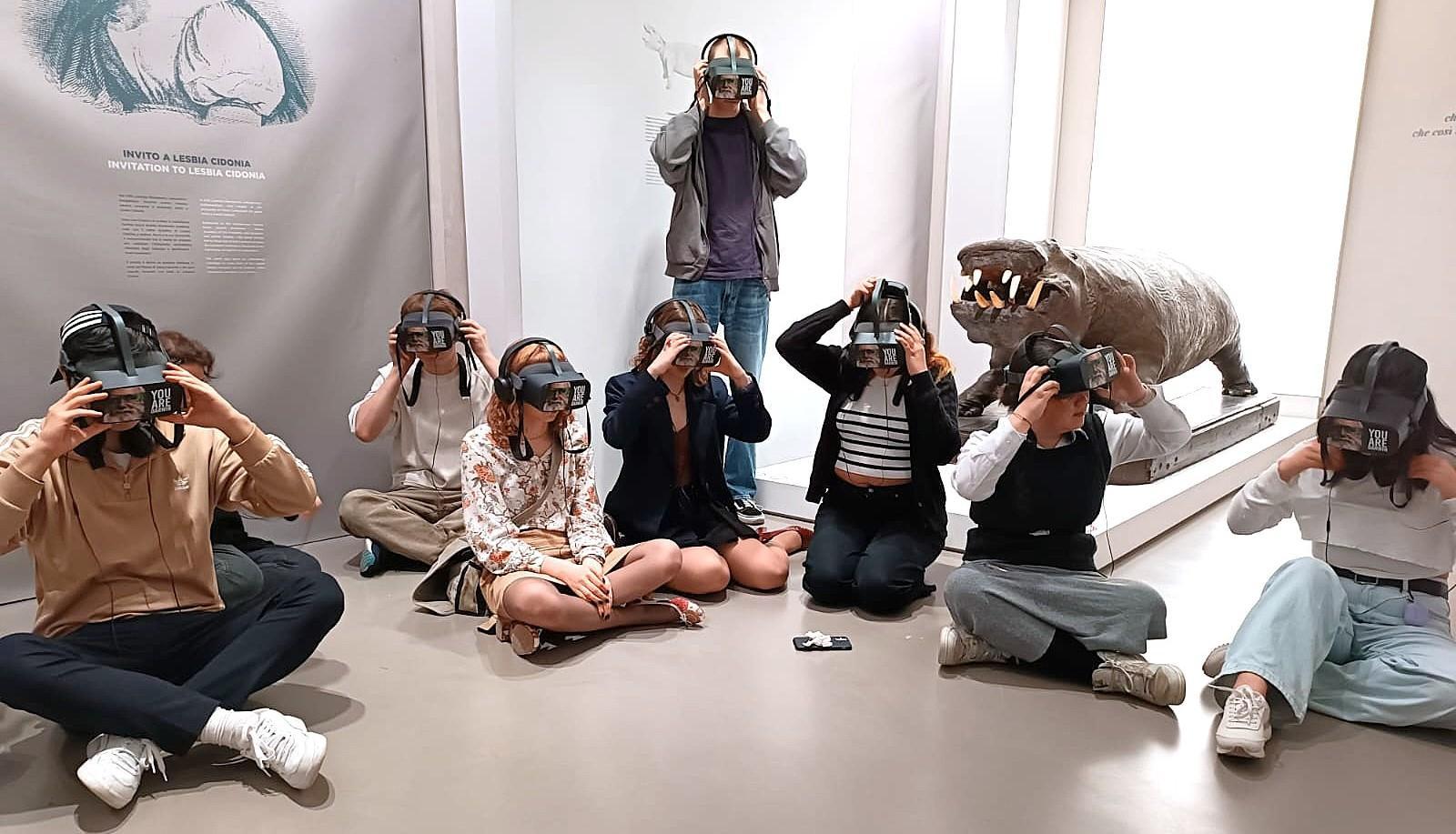
Environmental science becomes more meaningful when students experience ecosystems virtually.
They can explore rainforests, coral reefs, glaciers, volcanoes, rivers, deserts, and wildlife habitats while observing the effects of climate change and human activity.
These immersive experiences help students understand global environmental challenges while encouraging responsible and sustainable thinking.
Skill Development Through VR Workshops in Schools
Practical skill development is another area where Virtual Reality is making a significant impact.
Many schools now organize VR Workshops for students that introduce emerging technologies while teaching problem-solving, creativity, teamwork, and digital literacy.
Vocational simulations allow students to practice electrical work, machine operation, healthcare procedures, hospitality services, automotive repair, and industrial safety without requiring expensive infrastructure.
Because learners can repeat activities safely, they gain confidence before transitioning to real-world equipment.
Establishing VR Labs for Schools
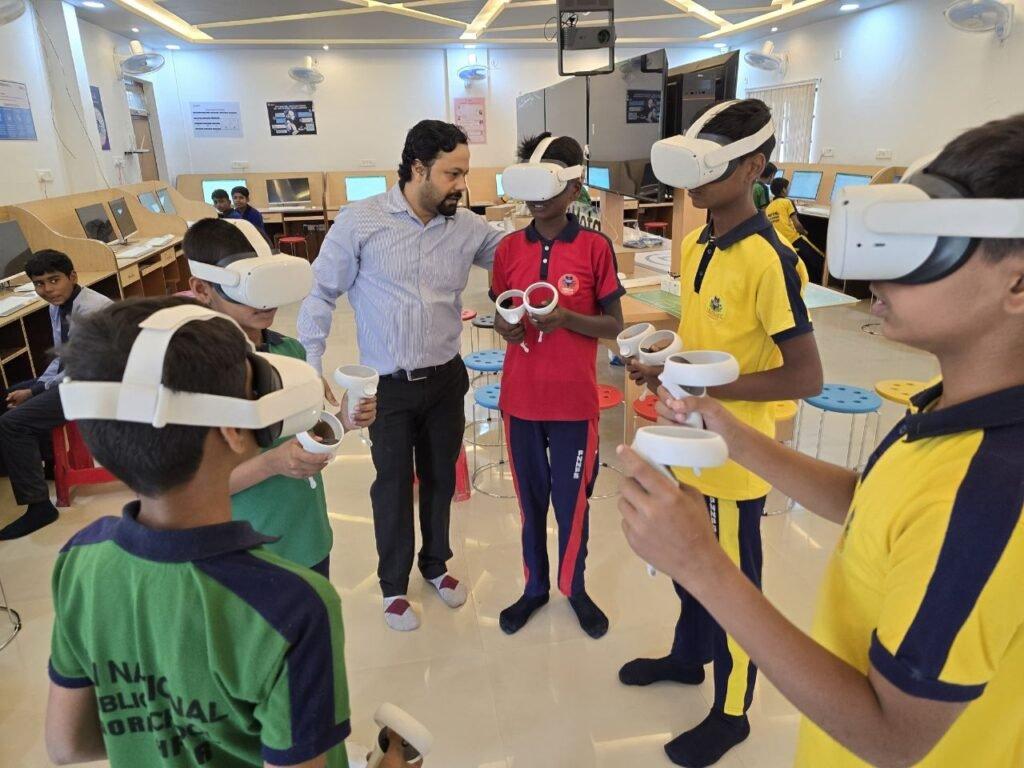
Dedicated VR Labs for Schools provide structured environments where immersive learning becomes a regular part of education rather than an occasional activity.
These laboratories typically include standalone VR headsets, educational software, classroom management systems, hygiene accessories, and teacher training resources.
Schools often integrate VR sessions into science, mathematics, geography, history, environmental studies, language learning, and career guidance programs.
As educational content continues to expand, VR laboratories become valuable long-term investments that support multiple subjects across different grade levels.
Best Practices for Successful Implementation
Introducing Virtual Reality into schools requires thoughtful planning.
Teachers should begin with short sessions that complement existing lesson plans rather than replacing traditional teaching methods. Each VR activity should support clear learning objectives and be followed by classroom discussions that reinforce key concepts.
Regular equipment maintenance, proper sanitation procedures, teacher training, and age-appropriate educational content are equally important.
By combining immersive experiences with effective pedagogy, schools can maximize learning outcomes while ensuring safe and comfortable classroom experiences.
Challenges Schools Should Consider
Although the advantages of Virtual Reality are substantial, schools should also plan for practical considerations.
Initial investment in hardware, teacher training, curriculum alignment, technical support, equipment maintenance, and classroom scheduling all require careful planning.
Fortunately, many schools begin with rental-based VR Workshop programs before establishing permanent VR Labs, allowing them to evaluate educational benefits without major capital investment.
Why Schools Across India Are Investing in VR
Educational institutions increasingly recognize that future-ready classrooms require more than digital screens.
Virtual Reality encourages curiosity, collaboration, creativity, and experiential learning while helping students develop skills relevant to higher education and modern workplaces.
Schools implementing VR Classes for Schools also strengthen their reputation among parents seeking innovative educational environments that prepare students for technology-driven careers.
As hardware becomes more affordable and educational applications continue expanding, immersive learning is expected to become an increasingly common feature of Indian classrooms.
Why Choose FabX Events for VR Workshops and School Activations
FabX Events delivers immersive educational technology solutions for schools, colleges, educational institutions, and learning organizations across India.
Our services include VR Workshops for Schools, VR Labs for Schools, educational VR demonstrations, virtual field trips, science simulations, astronomy experiences, historical explorations, environmental education, career guidance modules, and customized immersive learning programs aligned with institutional objectives.
Whether your school is organizing an annual technology festival, STEM education program, smart classroom initiative, or experiential learning workshop, our end-to-end VR solutions create engaging educational experiences that inspire students and support meaningful learning outcomes.
Conclusion
Virtual Reality is changing the way students learn by making education more interactive, engaging, and memorable. From virtual science laboratories and immersive history lessons to career exploration, environmental education, and language practice, VR empowers learners to experience concepts rather than simply study them.
As Indian schools continue embracing digital transformation under initiatives like NEP 2020 and smart classroom programs, technologies such as VR will play an increasingly important role in creating future-ready learning environments.
By thoughtfully integrating VR Workshops in School, establishing VR Labs in Schools, and introducing immersive classroom experiences, educational institutions can foster curiosity, improve learning outcomes, and prepare students with the knowledge and confidence needed for tomorrow's world.
Author Bio
Khushboo is a hospitality professional with over 12 years of experience and a degree in Hospitality. As the Corporate Sales Lead at FabX Events, She works closely with businesses, event organisers, and enterprises to provide the right technology rental solutions for conferences, exhibitions, training programmes, corporate events, and business projects. Passionate about technology and event innovation, Khushboo stays up to date with the latest hardware trends and shares practical insights, industry best practices, and expert advice through the FabX Events blog.