 Corporate Brand Activations
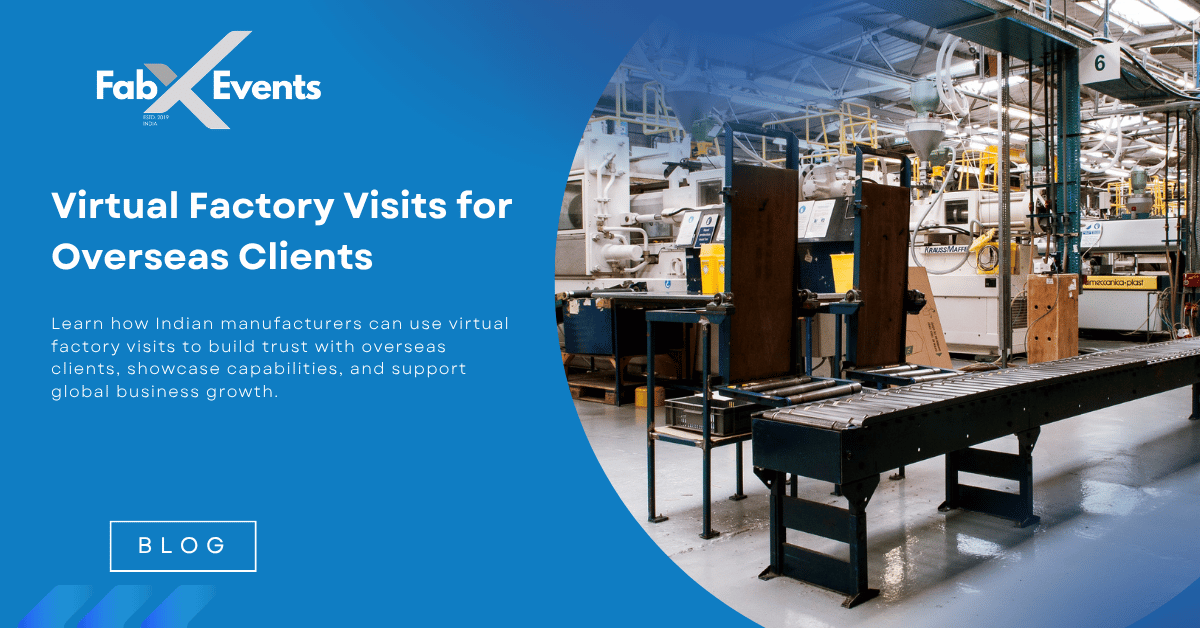
Virtual Factory Visits for Overseas Clients
Learn how Indian manufacturers can use virtual factory visits to build trust with overseas clients, showcase capabilities, and support global business growth.
Virtual Factory Visits for Overseas Clients: How Indian Manufacturers Can Build Global Trust Without International Travel
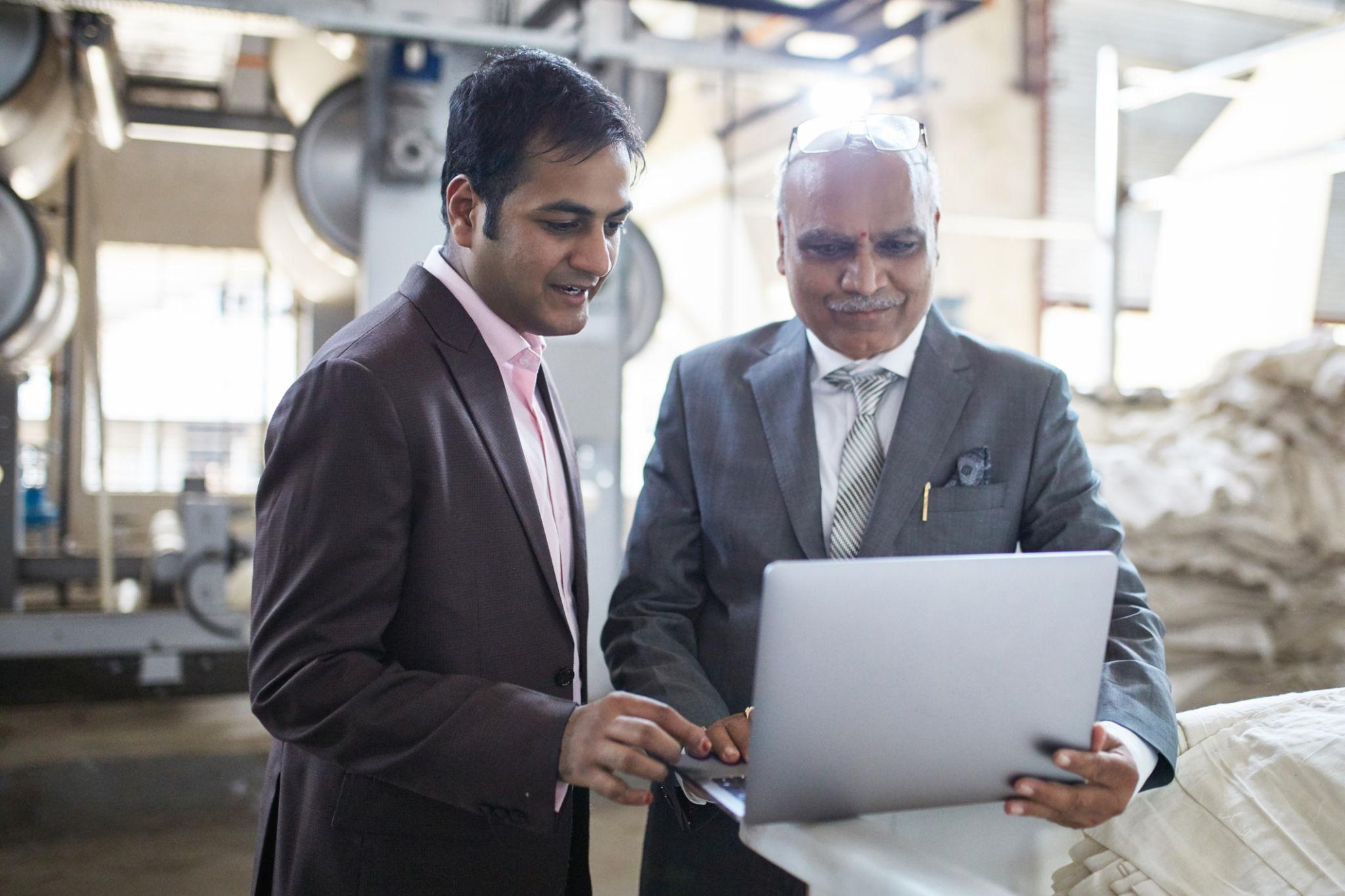
For an overseas buyer evaluating a new manufacturing partner in India, a factory is more than a building.
It represents production capability, quality standards, workforce expertise, technology, infrastructure, operational discipline, and ultimately the supplier's ability to deliver what has been promised.
This is why factory visits have traditionally played such an important role in international sourcing.
A buyer may review a website, exchange emails, study product catalogues, request samples, examine certifications, and hold several meetings with a potential supplier. But there is still something different about seeing the manufacturing facility itself.
The question is: What happens when the buyer cannot travel to India?
This is where a virtual factory visit can become a powerful tool for Indian manufacturers.
A well-planned virtual factory visit allows international prospects to see manufacturing operations remotely, interact with the factory team, ask questions in real time, observe production and quality processes, and develop a better understanding of the company behind the products.
For Indian manufacturers looking to expand internationally, this is not simply a technology trend. It can become an important part of the modern B2B sales and trust-building process.
What Is a Virtual Factory Visit?
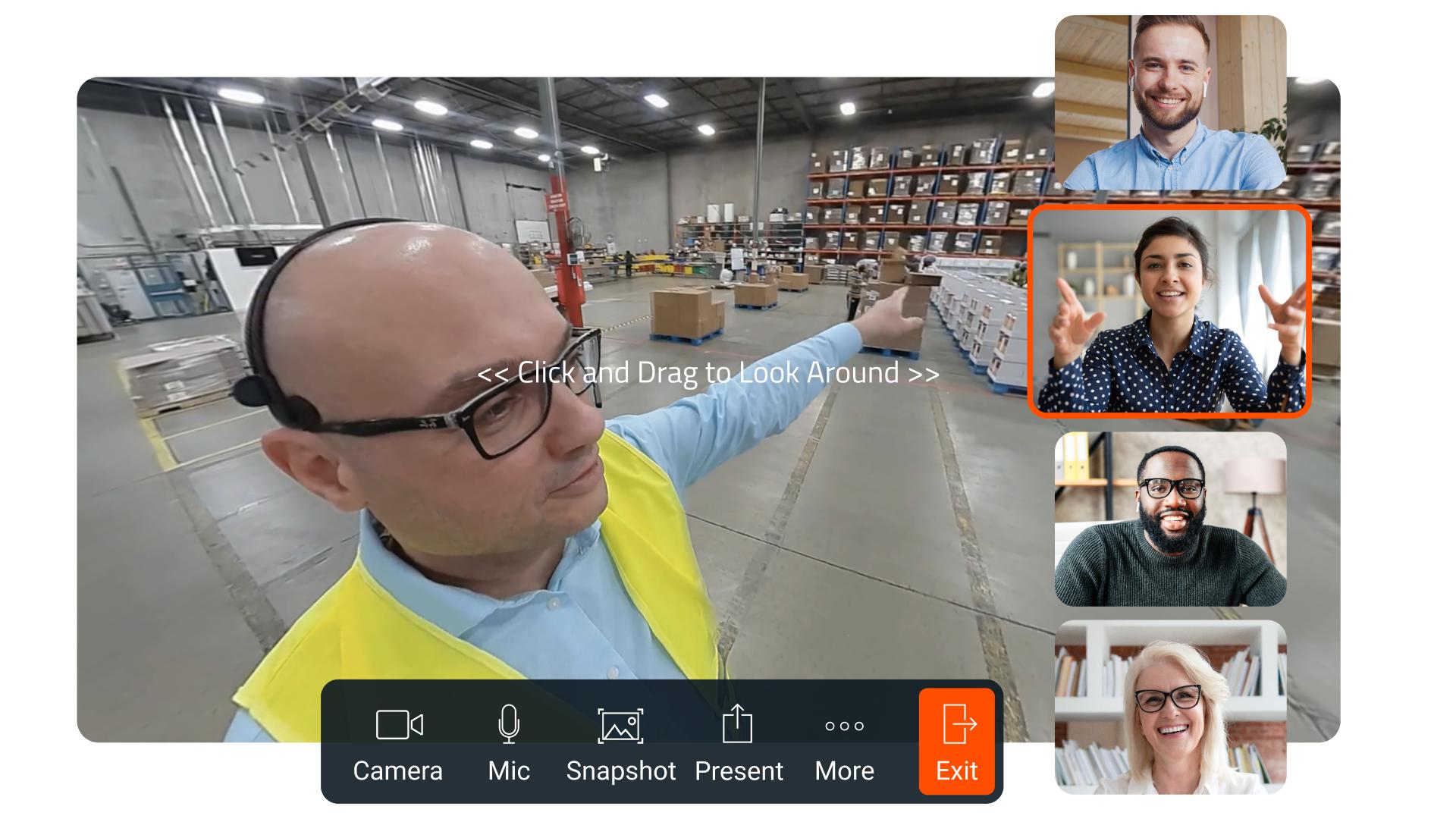
A virtual factory visit is a structured digital experience that allows a potential customer, sourcing team, procurement professional, technical evaluator, or business partner to explore a manufacturing facility remotely.
Depending on the manufacturer's requirements, it can take several forms:
- A live video walkthrough of the factory
- A guided video call with the manufacturing team
- A professionally recorded factory tour
- A 360-degree virtual factory tour
- A combination of recorded videos and live interaction
- A remote quality or capability assessment
- A scheduled virtual supplier introduction followed by a live factory walkthrough
The most effective approach is usually more than simply switching on a smartphone camera and walking around the plant.
A professional virtual factory visit should have a clear structure.
The overseas client should understand:
Who are you?
What do you manufacture?
Where and how do you manufacture it?
What technology and equipment do you use?
How do you control quality?
Who manages the operation?
What production capabilities do you have?
How do you handle storage, packaging and dispatch?
Can you meet the buyer's specifications and volumes?
The objective is not to show every corner of a factory.
The objective is to give a potential international customer enough meaningful visibility to develop confidence in the manufacturer.
Why Factory Visibility Matters to International Buyers
International sourcing involves a higher degree of uncertainty than domestic purchasing.
An overseas buyer may be thousands of kilometres away from an Indian supplier. They may never have met the manufacturing team physically. They may have limited knowledge of the company's operating environment.
The buyer therefore has to evaluate more than the product itself.
They need confidence in the supplier.
A buyer may ask:
- Does this company actually manufacture the products it sells?
- Does the factory have sufficient capacity?
- Is the machinery suitable for the required product?
- Are production processes organised?
- Does the company have appropriate quality-control systems?
- Can it handle the required order volume?
- Does the manufacturer understand international customer requirements?
- Is the workforce trained?
- Are raw materials and finished goods managed properly?
- Does the company have reliable testing and inspection processes?
- Can the manufacturer scale production if demand increases?
- Is the supplier likely to be dependable over the long term?
A factory visit can answer many of these questions.
But international travel requires time, money, visas, coordination, schedules, and internal approvals.
A virtual factory visit reduces many of those barriers.
It allows an initial factory evaluation to happen before the buyer decides whether a physical visit is necessary.
That distinction is important.
A virtual visit does not necessarily replace every physical factory audit.
Instead, it can become an additional layer in the buyer's supplier-evaluation journey.
Virtual Factory Visits Are About Trust, Not Technology
It is tempting to think that the main purpose of a virtual factory tour is to demonstrate that a company has modern technology.
That is not the real value.
The real value is transparency.
An overseas buyer wants to understand the company behind the product.
A polished corporate video can communicate brand messaging. A product catalogue can communicate specifications. A website can communicate capabilities.
A factory visit can demonstrate those claims in a more tangible way.
When a manufacturer takes an international buyer through its production floor, introduces the people responsible for operations, demonstrates machinery, explains quality checks and answers technical questions, the interaction becomes more credible.
The factory becomes part of the manufacturer's brand story.
Instead of simply saying:
"We have advanced manufacturing capabilities."
The company can show the buyer what those capabilities look like.
Instead of saying:
"Quality is important to us."
The manufacturer can demonstrate inspection, testing, documentation and quality-control processes.
Instead of saying:
"We can handle large orders."
The company can explain production capacity, equipment, processes, manpower and planning.
This is why a virtual factory visit should be treated as a brand trust experience, not merely a video call.
What Should an Indian Manufacturer Show During a Virtual Factory Visit?
The exact tour will vary according to the industry.
An automotive component manufacturer will have different priorities from a textile manufacturer.
A pharmaceutical company will have different requirements from an engineering company.
A food-processing facility will have a different tour structure from an electronics manufacturer.
However, there are several common areas that most international buyers will want to understand.
1. Start With the Facility Overview
Begin with a simple introduction to the manufacturing facility.
Show:
- Factory exterior
- Company signage
- Reception or entrance
- Overall facility layout
- Manufacturing units
- Warehouses
- Testing or laboratory areas
- Dispatch areas, where relevant
The objective is to establish context.
The buyer should understand what they are looking at before the detailed production walkthrough begins.
A short introduction from a senior member of the organisation can also make the experience more personal.
2. Introduce the People Behind the Factory
Manufacturing is not only about machines.
It is also about people.
Introduce the people who are relevant to the buyer's decision:
- Plant head
- Production manager
- Quality manager
- Engineering team
- Technical specialists
- Export or international business team
- Relevant operators or supervisors
This helps international customers put faces to the organisation they may eventually work with.
For an overseas buyer, knowing who will handle production, quality and communication can be just as valuable as seeing the machinery.
3. Show Manufacturing Processes
The production floor is usually the centrepiece of the virtual factory visit.
Depending on the industry, this could include:
- CNC machining
- Casting
- Forging
- Fabrication
- Welding
- Assembly
- Injection moulding
- Stamping
- Cutting
- Spinning
- Weaving
- Dyeing
- Printing
- Packaging
- Filling
- Processing
- Surface treatment
- Testing
- Final inspection
The guide should explain what is happening rather than simply moving the camera around.
For example:
Instead of:
"This is our production area."
Explain:
"This section handles the first stage of production. Raw material is inspected before entering this process. The components are then processed according to the customer's specified dimensions before moving to the inspection stage."
That small difference turns a video walkthrough into a useful business conversation.
4. Demonstrate Machinery and Technology
Buyers may want to understand the manufacturer's technical capabilities.
Show relevant equipment and explain:
- Machine type
- Manufacturing capability
- Production application
- Automation level
- Capacity where appropriate
- Tolerances where relevant
- Process controls
- Inspection associated with the process
Not every machine needs to be shown.
Select equipment that demonstrates the capabilities most relevant to the target customer.
For example, an engineering buyer may want to understand machining capability, inspection equipment and production capacity.
A textile buyer may be more interested in production lines, fabric processing, quality control and finishing.
A food manufacturer may focus on processing, hygiene, packaging, storage and quality systems.
The virtual tour should therefore be customer-oriented rather than factory-oriented.
5. Make Quality Control Visible
Quality is one of the most important parts of an international supplier evaluation.
It should therefore receive significant attention during a virtual factory visit.
Depending on the sector, manufacturers can show:
- Incoming material inspection
- In-process inspection
- Final inspection
- Testing laboratories
- Measuring equipment
- Quality documentation
- Inspection procedures
- Sampling processes
- Traceability systems
- Calibration practices
- Packaging inspection
Where commercially appropriate, manufacturers can explain how a product moves through the quality process.
This helps transform an abstract statement such as "we maintain strict quality standards" into something observable.
For international buyers, that visibility can make a significant difference.
6. Show Warehousing and Inventory Management
The factory tour should not necessarily end when manufacturing ends.
The buyer also wants to understand what happens afterward.
Show relevant areas such as:
- Raw-material storage
- Work-in-progress areas
- Finished-goods warehouse
- Packaging areas
- Inventory identification
- Labelling
- Palletisation
- Dispatch preparation
This can provide insight into operational discipline.
A well-organised warehouse can communicate a great deal about a manufacturer's processes without requiring lengthy explanations.
7. Demonstrate Packaging and Export Readiness
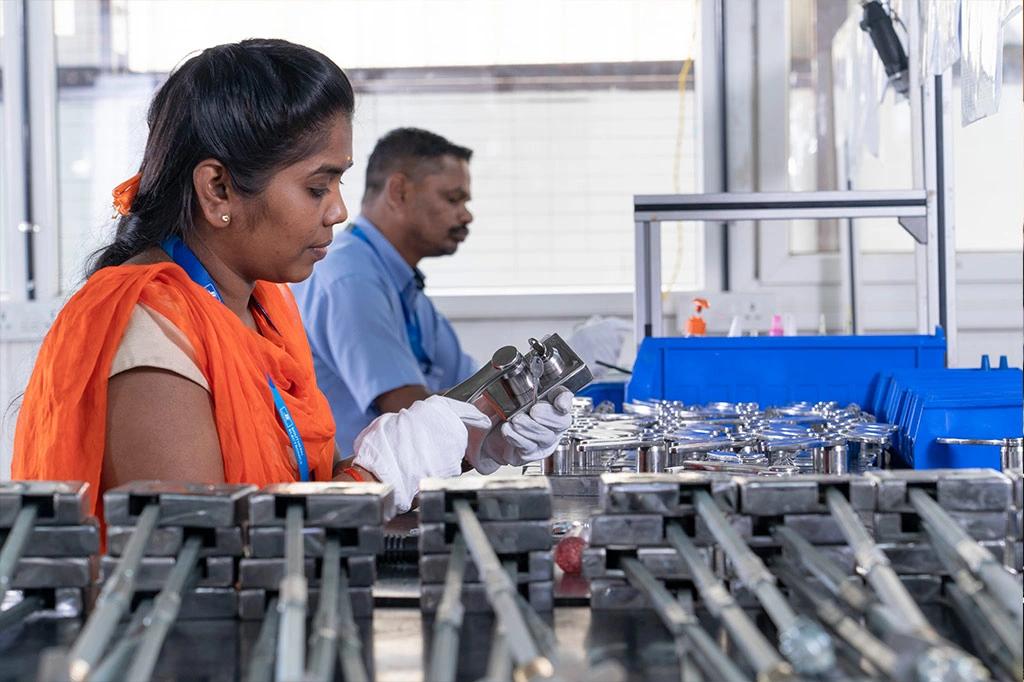
For international buyers, packaging can be particularly important.
Products may travel long distances and pass through multiple logistics stages before reaching their destination.
Manufacturers can therefore explain:
- Packaging methods
- Product protection
- Labelling
- Export documentation processes
- Palletisation
- Container loading
- Special packaging requirements
- Customer-specific packaging capabilities
The exact information will vary according to the product and destination market.
The goal is to demonstrate that the manufacturer understands the complete supply chain rather than only the production stage.
8. Include a Live Question-and-Answer Session
One of the strongest advantages of a live virtual factory visit is interaction.
The buyer can ask questions while seeing the operation.
For example:
Buyer: "How do you control this dimension during production?"
Factory team: "This parameter is checked at this stage using..."
Or:
Buyer: "Can this line accommodate higher monthly volumes?"
The production manager can explain the current process and available capacity.
These conversations are valuable because they demonstrate not only the facility but also the knowledge and responsiveness of the team.
That is an important part of supplier trust.
Virtual Factory Visits Across Different Manufacturing Industries
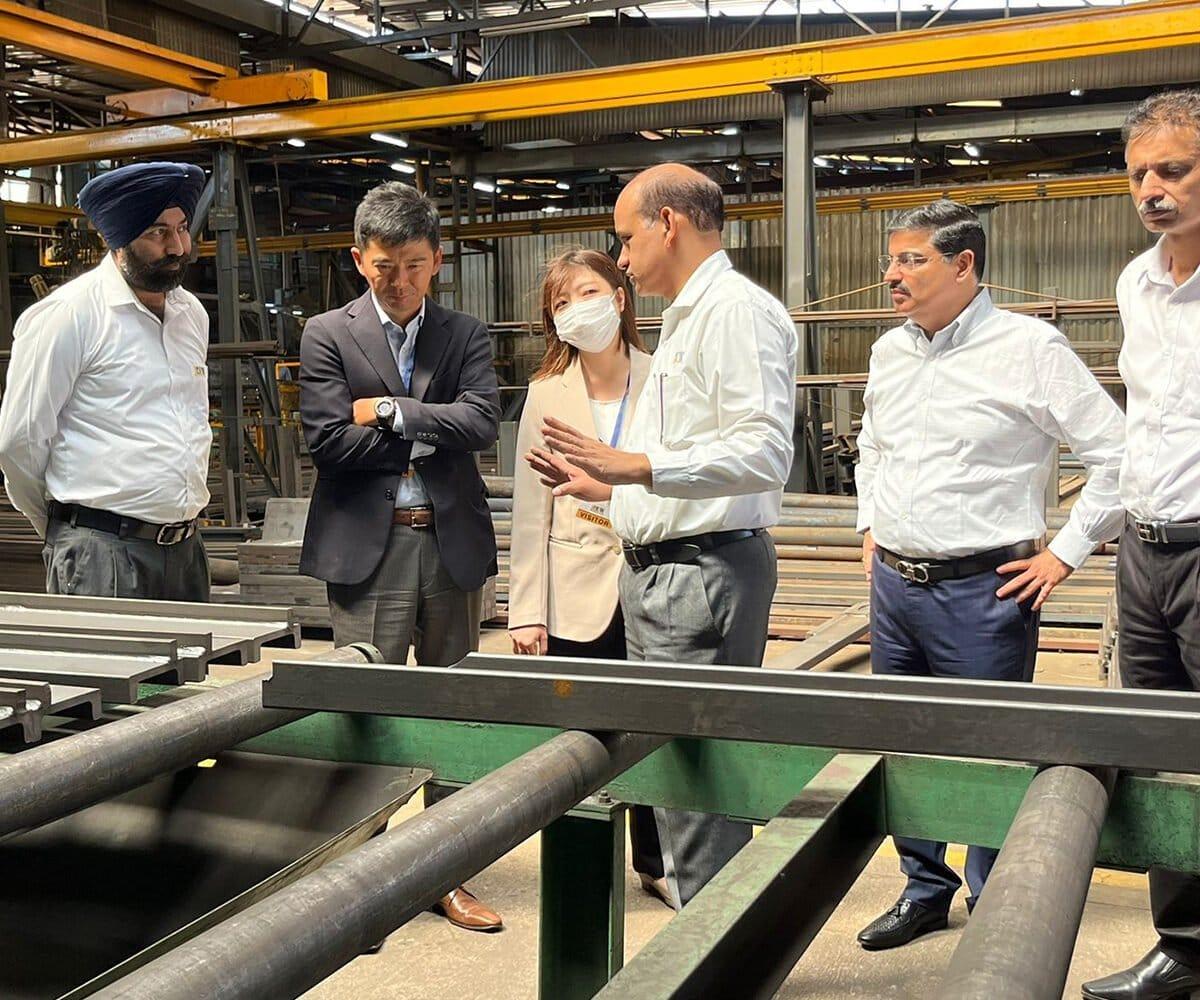
One reason virtual factory visits are particularly powerful for Indian manufacturers is that the concept can work across almost every manufacturing sector.
Engineering and Industrial Manufacturing
Focus on:
- Machinery
- CNC equipment
- Fabrication
- Tooling
- Production capacity
- Dimensional inspection
- Testing
- Assembly
- Engineering capabilities
Automotive and Auto Components
Focus on:
- Production lines
- Process controls
- Traceability
- Inspection
- Testing
- Tooling
- Assembly
- Quality systems
- Capacity
Textiles and Apparel
Focus on:
- Spinning
- Weaving or knitting
- Dyeing
- Processing
- Cutting
- Stitching
- Finishing
- Quality inspection
- Packaging
Pharmaceuticals and Healthcare Manufacturing
Focus on:
- Facility infrastructure
- Controlled manufacturing environments
- Quality systems
- Testing laboratories
- Documentation
- Packaging
- Compliance-related processes
The presentation must, of course, respect confidentiality, regulatory requirements and restricted-access areas.
Electronics Manufacturing
Focus on:
- Assembly
- Component handling
- Production lines
- Testing
- Inspection
- Traceability
- Packaging
- ESD controls where applicable
Food Processing
Focus on:
- Raw-material handling
- Processing
- Hygiene
- Quality control
- Packaging
- Storage
- Cold-chain infrastructure where applicable
- Dispatch
The lesson is simple:
The virtual factory visit should be customised around what matters most to the buyer.
Live Virtual Tour vs. Pre-Recorded Factory Video
Indian manufacturers have several options when creating digital factory experiences.
Live Virtual Factory Visit
A representative guides the buyer through the facility in real time.
Advantages
- Real-time questions
- Greater interaction
- More transparency
- Personalised experience
- Ability to focus on buyer-specific requirements
Limitations
- Requires coordination
- Internet connectivity matters
- Production activity may change
- Requires a trained guide
Pre-Recorded Factory Tour
A professionally produced video provides a structured overview of the facility.
Advantages
- Can be used repeatedly
- Consistent presentation
- Better control over filming
- Easy to share with prospects
- Can include subtitles and graphics
- Useful for website and sales presentations
Limitations
- No real-time questions
- Can appear overly polished if not supported by genuine interaction
- May become outdated as facilities change
The Best Approach: Combine Both
For many manufacturers, the strongest strategy is not choosing one over the other.
It is creating a digital factory-tour system.
For example:
Step 1: The prospect watches a short factory overview.
Step 2: The sales team schedules a live virtual factory visit.
Step 3: The buyer receives a customised walkthrough.
Step 4: Technical and quality questions are answered.
Step 5: Relevant documents and product information are shared.
Step 6: A physical factory audit can be arranged later if required.
This creates a much more structured international sales journey.
How Virtual Factory Visits Help Indian Manufacturers Build Brand Trust
For Indian manufacturers, the biggest opportunity is not simply generating another marketing video.
It is changing how the company presents itself to global customers.
Traditional manufacturing marketing often focuses heavily on:
- Products
- Specifications
- Machinery
- Certifications
- Years of experience
- Production capacity
All of these matter.
But international buyers also want to understand the organisation behind the specifications.
A virtual factory visit adds a human and operational dimension to the brand.
It allows a manufacturer to communicate:
"This is who we are."
"This is where we manufacture."
"This is how we work."
"These are the people responsible for your order."
"This is how we control quality."
"This is how we prepare your products for delivery."
That can make the manufacturer feel more tangible and credible to an overseas prospect.
Virtual Factory Visits Can Shorten the Initial Evaluation Process
International supplier evaluation can take considerable time.
A buyer may exchange dozens of emails before deciding whether a manufacturer is worth visiting.
A virtual factory visit can bring several discussions together.
Instead of answering every question separately, the manufacturer can demonstrate relevant processes during a structured session.
This can help buyers quickly determine:
- Whether the facility is relevant
- Whether the manufacturer has the required equipment
- Whether the production scale appears appropriate
- Whether quality systems meet their expectations
- Whether the company is worth progressing to the next stage
It therefore becomes a qualification tool as well as a sales tool.
Virtual Visits Also Help Prepare for Physical Factory Audits
A virtual visit does not have to eliminate physical visits.
In many cases, it can make the eventual physical visit more productive.
Suppose an international buyer has already completed a virtual tour.
They already know:
- Where production takes place
- Which machines are relevant
- Who manages the facility
- Where quality control happens
- What products are manufactured
- How the basic production flow works
When they eventually visit India, they can focus on deeper technical, commercial and operational questions.
The physical visit becomes more focused.
This can save time for both the buyer and the manufacturer.
How to Conduct a Professional Virtual Factory Visit
A successful virtual factory visit requires preparation.
Plan the Route
Do not improvise the entire tour.
Create a simple route:
Introduction → Facility overview → Raw materials → Production → Quality → Warehouse → Packaging → Dispatch → Q&A
The exact sequence can vary.
But the buyer should always know where they are in the story.
Prepare the Factory
Clean and organise the areas that will be shown.
Ensure:
- Relevant equipment is operational where possible
- Walkways are clear
- Safety procedures are followed
- Signage is visible
- Employees know a tour is taking place
- Confidential information is protected
- Restricted areas are identified
The objective is not to create an artificial factory.
It is to present the real factory professionally.
Choose the Right Guide
The person holding the camera does not necessarily need to be a professional presenter.
However, they should understand the manufacturing process.
A strong guide can answer basic questions and bring the right technical person into the conversation when required.
For example:
Sales representative + production manager + quality manager
can be a more effective combination than a single person trying to answer every question.
Pay Attention to Audio
Poor audio can ruin an otherwise excellent virtual tour.
Manufacturing environments can be noisy.
Therefore, manufacturers should consider:
- Appropriate microphones
- Headsets
- Noise management
- Clear introductions
- Moving to quieter locations for detailed discussions
The buyer should be able to hear explanations clearly.
Consider Time Zones
An Indian manufacturer may be speaking with customers in:
- Europe
- North America
- Middle East
- Australia
- Southeast Asia
- Africa
Scheduling should therefore consider the buyer's local time.
A professional international sales process should make participation convenient for the customer.
What Should Manufacturers Avoid?
A virtual factory visit can lose its credibility if it feels like a carefully staged advertisement.
Avoid:
Showing only the best-looking areas
Buyers are interested in operational reality.
Talking continuously without allowing questions
A virtual visit should be a conversation.
Using excessive marketing language
Specific demonstrations are usually more credible than exaggerated claims.
Showing confidential customer information
Protect customer names, drawings, specifications and commercially sensitive information.
Walking too quickly through production
The buyer needs time to understand what they are seeing.
Ignoring quality control
Production capacity without quality assurance does not provide a complete picture.
Failing to prepare technical answers
Questions about capacity, materials, tolerances, testing or processes may arise.
The relevant team should be available.
Turning the Virtual Factory Visit Into a Repeatable Sales Asset
The biggest mistake would be to treat the virtual factory visit as a one-time event.
Manufacturers can turn it into a reusable international sales asset.
For example, create:
1. A Short Factory Introduction
A 1–2 minute overview suitable for initial prospects.
2. A Detailed Factory Tour
A longer video covering manufacturing operations.
3. Industry-Specific Tours
If the company serves multiple industries, create versions focused on different customer requirements.
4. Live Virtual Visits
Offer qualified prospects a personalised tour.
5. Technical Demonstrations
Create short videos demonstrating specific processes, equipment or testing capabilities.
6. Quality-Focused Content
Show inspection, testing and quality-control processes.
This creates a complete digital manufacturing trust library.
Add Virtual Factory Visits to Your Website
Indian manufacturers can also make virtual factory experiences part of their digital presence.
A website visitor should not only see:
Products | About Us | Contact Us
The company can also communicate:
Explore Our Factory
or
Take a Virtual Tour
or
See How We Manufacture
This can help transform the manufacturer's website from a digital brochure into a demonstration of manufacturing capability.
For international prospects who have never visited India, this can provide valuable context before they contact the sales team.
Use Virtual Factory Visits During International Trade Development
Virtual factory visits can be particularly useful when developing overseas markets.
For example, an Indian manufacturer exhibiting at an international trade show can invite interested prospects to a follow-up virtual factory visit.
The sequence can be:
Trade show conversation → Product discussion → Virtual factory visit → Sample evaluation → Commercial discussion → Audit/visit → Order
The virtual tour becomes one step in the relationship-building process.
This is especially useful when prospects are interested but are not yet ready to invest time and money in travelling to India.
The Human Element Matters
Technology can show a factory.
People build relationships.
This is why manufacturers should not make the virtual experience entirely about machines.
Introduce the production team.
Let the quality manager explain an inspection process.
Allow the engineering team to discuss technical capabilities.
Have the plant head explain how production is managed.
Give the overseas buyer an opportunity to ask questions.
These interactions help the buyer understand the culture and professionalism of the organisation.
Ultimately, an overseas customer is not only choosing a production facility.
They are choosing a business partner.
Virtual Factory Visits and the Future of Global Manufacturing Sales
Manufacturing is becoming increasingly digital.
Buyers can discover suppliers online, review product information remotely, communicate through video meetings, exchange technical documents digitally, and evaluate capabilities before travelling.
Virtual factory visits fit naturally into this evolution.
They do not make physical relationships irrelevant.
Instead, they allow those relationships to begin earlier.
An international buyer can learn about an Indian manufacturer before boarding a plane.
A manufacturer can introduce its capabilities to customers it has never met.
A technical team can demonstrate processes remotely.
A sales team can provide factory visibility during the early stages of a conversation.
This makes the geographic distance between buyer and manufacturer less of a barrier.
A Practical Checklist for Indian Manufacturers
Before conducting a virtual factory visit, ask:
Factory
- Is the facility clean and organised?
- Is the planned route clear?
- Are relevant machines operational?
- Are safety practices visible?
Production
- Which processes should be demonstrated?
- What equipment is most relevant?
- What production capabilities should be explained?
Quality
- Where does inspection happen?
- What testing can be demonstrated?
- Which quality processes can be explained?
People
- Who will host the tour?
- Who can answer technical questions?
- Who can answer quality questions?
- Who will manage the international customer afterward?
Technology
- Is the internet connection reliable?
- Is the camera suitable?
- Is the audio clear?
- Is there adequate lighting?
Customer Experience
- What does the buyer want to see?
- What questions are likely to arise?
- What time zone is the buyer in?
- What information should be shared afterward?
Confidentiality
- Are customer details protected?
- Are sensitive drawings or documents hidden?
- Are restricted production areas excluded?
A few hours of preparation can make the difference between an ordinary video call and a highly credible manufacturing experience.
From Factory Tour to Factory Trust
The real purpose of a virtual factory visit is not to prove that an Indian manufacturer owns machines.
It is to reduce uncertainty.
International buyers need confidence before they commit to a new supplier.
They want to know that the manufacturer is real, capable, organised, transparent and able to understand their requirements.
A virtual factory visit can bring those qualities to life.
It can show the production floor.
It can introduce the people.
It can demonstrate quality.
It can explain technology.
It can answer questions.
And most importantly, it can start building a relationship before the buyer ever sets foot in India.
For Indian manufacturers seeking international business, this represents an important opportunity.
The factory no longer has to wait for the buyer to arrive.
The factory can come to the buyer.
And when that experience is planned thoughtfully, presented honestly and supported by knowledgeable people, a virtual factory visit becomes much more than a remote tour.
It becomes a digital gateway to manufacturing trust.
Final Thought
For decades, the factory visit has been one of the most powerful ways for an international buyer to evaluate an Indian manufacturing partner.
Today, manufacturers have another opportunity.
They can make their factory accessible digitally.
A virtual factory visit cannot replace every physical interaction. But it can make the first interaction easier, faster and more transparent.
For Indian manufacturers pursuing global customers, that matters.
Because in international manufacturing, trust is often the first product you need to deliver.
Author Bio
Khushboo is a hospitality professional with over 12 years of experience and a degree in Hospitality. As the Corporate Sales Lead at FabX Events, She works closely with businesses, event organisers, and enterprises to provide the right technology rental solutions for conferences, exhibitions, training programmes, corporate events, and business projects. Passionate about technology and event innovation, Khushboo stays up to date with the latest hardware trends and shares practical insights, industry best practices, and expert advice through the FabX Events blog.
FAQs